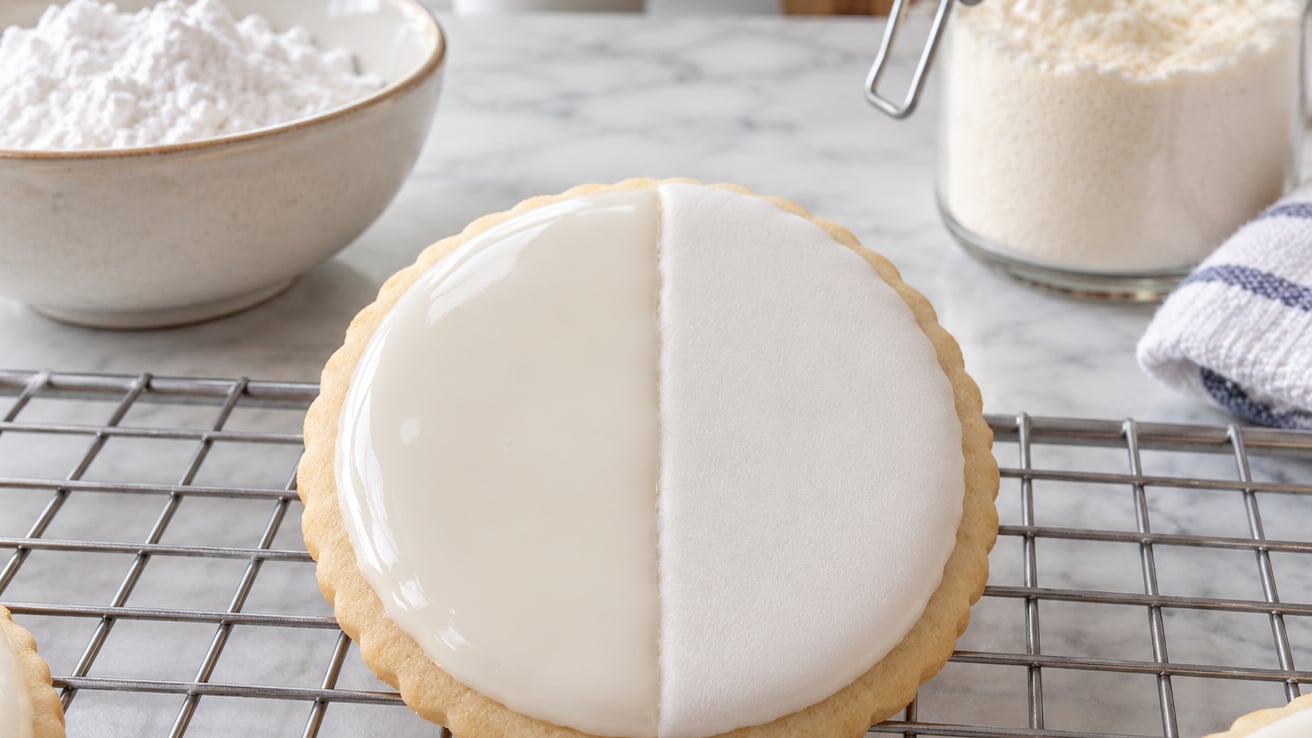
Meringue powder and fresh egg whites both make royal icing that dries hard enough to stack and ship, but they don’t behave the same in the bowl or on the cookie. Meringue powder wins on food safety, shelf life, and beginner-friendly consistency, while fresh egg whites give a slightly cleaner flavor and a glossier finish that some traditionalists prefer. Pick meringue powder for shipping cookies, decorating with kids, and last-minute batches; pick egg whites when traditional taste and shine matter most.
Table of Contents
- Meringue Powder vs Egg Whites in Royal Icing at a Glance
- What Is Meringue Powder and What Does It Do in Royal Icing?
- What Fresh Egg Whites Bring to Royal Icing
- Texture, Drying Time and Piping Performance
- Flavor and Color: Which Tastes and Looks Better?
- Food Safety: Raw Eggs vs a Pasteurized Powder
- Shelf Life, Storage and Convenience
- Cost and Availability
- Which Should You Choose?
- Frequently Asked Questions
- Can you substitute meringue powder for egg whites in royal icing?
- How much meringue powder equals one egg white in royal icing?
- Does royal icing with meringue powder taste different from real egg whites?
- Is royal icing with raw egg whites safe to eat?
- Why is my meringue powder royal icing not drying hard?
- Can you make royal icing with meringue powder ahead of time?
Meringue Powder vs Egg Whites in Royal Icing at a Glance
| Factor | Meringue Powder | Fresh Egg Whites |
|---|---|---|
| Base ingredient | Dried pasteurized egg whites, sugar, stabilizers | Whites from raw shell eggs (or pasteurized carton) |
| Food safety | Fully pasteurized; no salmonella risk | Raw carries salmonella risk; pasteurized cartons are safe |
| Shelf life | Months in a sealed container, pantry-safe | About 4 to 5 weeks refrigerated; raw whites a few days once separated |
| Prep time | Measure, whisk with water, done | Crack, separate, possibly bring to room temperature |
| Flavor | Mild, slightly sweet, occasional “powder” note | Cleaner, faintly eggy if you notice it |
| Finish when dry | Matte to soft sheen, reliably hard | Slightly glossier, very hard |
| Best for | Shipping, kids, large batches, hot kitchens | Traditional taste, glossy finish, small batches |
What Is Meringue Powder and What Does It Do in Royal Icing?
Meringue powder is a shelf-stable mix of dried pasteurized egg whites, a small amount of sugar, and stabilizers like cornstarch, cream of tartar, or citric acid. The acid and the dried proteins are what do the heavy lifting in royal icing: they whip into a stable foam that traps air, then dries into a hard, smooth shell over the next several hours.
Because the egg whites are already pasteurized and dried, you skip both the salmonella worry and the separating step. You also skip the variables that frustrate home bakers: the room-temperature egg that was actually a little cold, the yolk that snuck into the bowl, the humidity that day. Add water, whisk, and the powder behaves the same way every time. That predictability is why professional cookie decorators tend to reach for it.
The classic substitution ratio is 2 teaspoons of meringue powder plus 2 tablespoons of water for every 1 egg white. Most royal icing recipes call for 3 to 4 “egg whites” worth per batch of icing, so a small canister lasts through quite a few holiday trays.
What Fresh Egg Whites Bring to Royal Icing
Fresh egg whites are exactly what they sound like: the clear liquid you separate from the yolk of a shell egg. The proteins in those whites (mostly ovalbumin) are what let royal icing whip up into a foam that holds its shape and sets into a firm, glossy finish.
There are two main ways to use them. You can crack and separate your own, then either let the whites sit covered in the fridge for a day or two (which softens the proteins and helps them whip more easily), or you can buy a carton of pasteurized liquid egg whites at the grocery store. Pasteurized whites give you the structure of fresh eggs with the safety of a heat-treated product, which is a quiet middle path a lot of bakers settle on.
Whichever route you take, the bowl, whisk, and anything the icing touches need to be completely grease-free. A trace of yolk or butter on the beaters and the whites won’t whip properly, which is the single most common reason egg-white royal icing fails.
Texture, Drying Time and Piping Performance
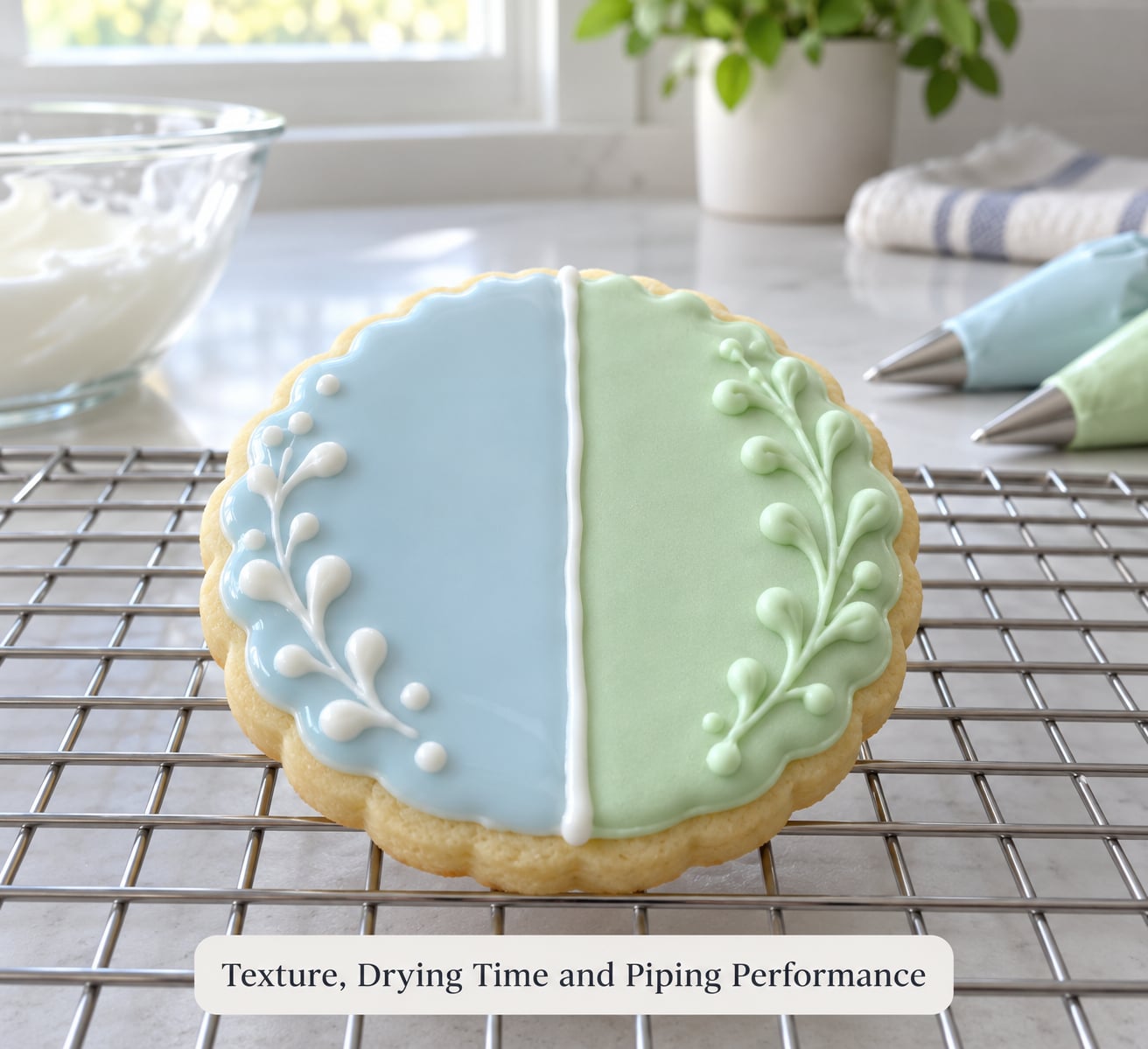
Meringue powder and egg whites pipe almost identically once you’ve adjusted the water. Outlines hold a clean edge, flood work settles in about 10 to 15 seconds when you lift the beaters, and both dry to a hard, candy-like shell that can be stacked or wrapped after 6 to 12 hours at room temperature.
Where they differ is the surface look. Icing made with meringue powder tends to dry to a soft, matte sheen; icing made with fresh egg whites leans glossier, almost like ceramic tile. If you’re decorating wedding or Christmas cookies where you want a slightly polished look, the egg-white version has a small edge. For gingerbread houses and cut-out sugar cookies, the difference is barely visible once the icing is fully set.
On humidity, both struggle in damp kitchens, but meringue powder is a bit more forgiving because of the cornstarch and acids in the mix. If your kitchen runs above 60% humidity, plan on a fan running nearby or a dehumidifier in the room where the cookies dry.
Flavor and Color: Which Tastes and Looks Better?
Most people can’t tell meringue powder and egg white royal icing apart by taste, but a few can. The powder has a faint, slightly sweet aftertaste that comes through if you eat the icing plain, while fresh egg whites taste cleaner and a touch more “eggy” if you’re sensitive to it. With a teaspoon of vanilla and a tablespoon of lemon juice in the batch, the difference mostly disappears.
For color, both take gel food coloring well. Meringue powder icing stays a touch whiter out of the gate because the powder already contains sugar, which gives a slightly brighter base for pastels. Egg white icing can be made just as white by using clear vanilla instead of brown. If you want pure snow-white for a wedding set, both work; just don’t add any butter or dairy, which will yellow the surface.
Food Safety: Raw Eggs vs a Pasteurized Powder
The single biggest practical difference between the two is food safety. Raw shell eggs can carry salmonella, and the U.S. Centers for Disease Control and Prevention still recommends treating them as a potential risk, especially for young children, pregnant people, older adults, and anyone with a compromised immune system. Meringue powder sidesteps that concern completely because the egg whites are pasteurized before they’re dried.
If you want to use real eggs and avoid the risk, buy pasteurized liquid egg whites in a carton. They’re heated just enough to kill bacteria without cooking the proteins, and they whip up almost identically to fresh whites. That carton in the fridge is the middle path many cookie decorators land on for family baking.
For schools, church groups, cookie swaps, or any batch that kids will help decorate, meringue powder is the easier call. No one has to worry about the batch that sat out on the counter for an extra hour at the party.
Shelf Life, Storage and Convenience
Meringue powder keeps for months in a cool, dry pantry as long as the container is sealed. That’s a real advantage for occasional decorators who don’t want to keep a dozen eggs on hand “just in case.” Open the can, scoop what you need, and the rest waits patiently until next month.
Fresh egg whites (in the shell) last about 4 to 5 weeks refrigerated, and once separated they go into the bowl right away. Pasteurized cartons are typically good for a week or two once opened. If you bake seasonally, the powder is the lower-fuss choice. If you bake every weekend, the carton of pasteurized whites is probably already in your fridge anyway.
On prep speed, meringue powder saves a few minutes. Skip the cracking, the yolk-fishing, and the worrying about a stray bit of shell. You do still want to sift the powdered sugar and whisk the icing long enough to get those telltale soft peaks, but you skip the mess at the start.
Cost and Availability
Per batch of icing, meringue powder runs a bit higher than using eggs you already have on hand, and a bit lower than buying a carton of pasteurized whites for a one-off project. A typical 8-ounce container of meringue powder costs somewhere in the range most grocery and craft stores charge for a specialty baking item, and lasts through dozens of batches if you’re not icing wedding-volume trays.
A dozen large eggs in the U.S. runs a few dollars at most grocery stores, and a 16-ounce carton of pasteurized egg whites runs a few dollars more. For big holiday batches (think 50 to 100 cookies), the math flips in favor of meringue powder because there’s almost no waste and the consistency is reliable. For one or two trays a year, the eggs in your fridge are the better deal.
Availability is a non-issue for meringue powder at any craft or big-box store, and well-stocked grocery stores usually carry it near the cake decorating supplies. Pasteurized cartons are in most refrigerated egg aisles. Fresh eggs, of course, are everywhere.
Which Should You Choose?
For shipping cookies, decorating with kids, hot or humid kitchens, and any large batch where consistency matters, meringue powder is the right call. It beats the safety question, holds up in tough conditions, and gives you the same royal icing every time you mix it.
For traditional flavor, a slightly glossier finish, and small batches where you already have eggs on hand, fresh pasteurized egg whites are the way to go. They’re a little fussier to prep but reward careful bakers with a clean, classic result.
Pick meringue powder if: you’re shipping cookies, baking with kids, decorating in summer, or making more than three dozen cookies in a session. Pick fresh egg whites if: you bake often, care deeply about traditional taste, and want the glossiest possible finish. If you fall in between, keep both on hand and reach for whichever fits the project.
Frequently Asked Questions
Can you substitute meringue powder for egg whites in royal icing?
Yes, you can swap them in either direction. The standard substitution is 2 teaspoons of meringue powder plus 2 tablespoons of water for each egg white the recipe calls for. The icing will set a little faster with powder and may have a softer, matte finish rather than a glossy one.
How much meringue powder equals one egg white in royal icing?
Use 2 teaspoons of meringue powder mixed with 2 tablespoons of water to replace 1 large egg white. A typical royal icing recipe calls for 3 to 4 egg whites, so 6 to 8 teaspoons of powder plus the matching water is a good starting point for one batch.
Does royal icing with meringue powder taste different from real egg whites?
Most people can’t tell the two apart once vanilla and a little lemon juice are added. The powder can leave a faint sweet aftertaste if you eat the icing plain, while fresh egg whites taste slightly cleaner. With flavoring in the batch, the difference is minimal.
Is royal icing with raw egg whites safe to eat?
Raw shell eggs can carry salmonella, so the CDC still recommends caution, especially for young children, pregnant people, older adults, and anyone with a weakened immune system. Use pasteurized liquid egg whites from a carton, or use meringue powder, to get the same result without the raw-egg risk.
Why is my meringue powder royal icing not drying hard?
The most common causes are too much water, not enough powdered sugar, or high humidity in the room. Recheck the ratio, sift the sugar, and let the cookies dry in a dry, room-temperature spot with a fan moving air. Thin flooding layers dry faster than thick piped layers, so keep your flood work under one-eighth inch.
Can you make royal icing with meringue powder ahead of time?
Yes, and it’s one of the main reasons decorators like the powder. Store finished icing in an airtight container with a damp paper towel pressed against the surface, then seal. It keeps in the fridge for up to a week and in the freezer for a couple of months. Stir it back to smooth consistency before piping.