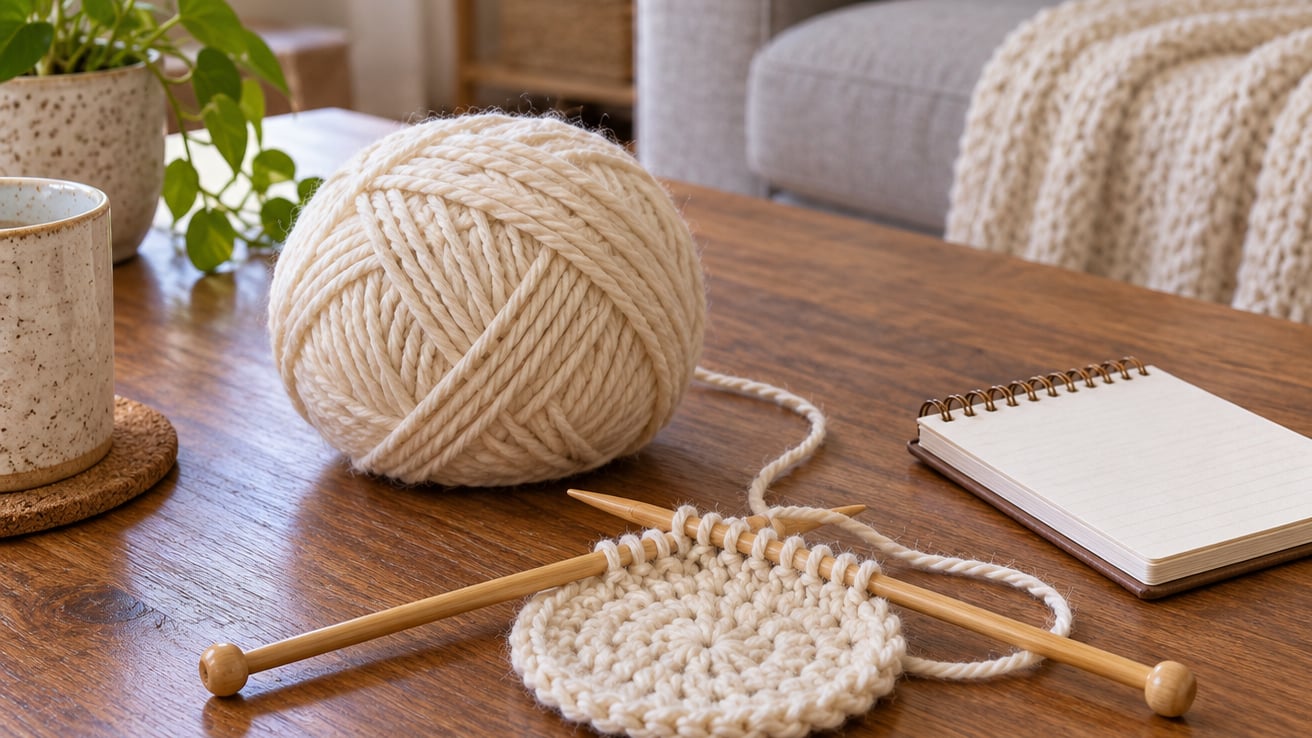
Kids can pick up knitting with short daily sessions of 10 to 15 minutes, plain words, and a ball of chunky yarn. Most children who practice consistently cast on and knit their first square within two to three weeks. This is a slow, screen-free craft, not a one-lesson skill, so the goal of the first month is finishing one small project, not mastering a whole sweater.
Below is the exact setup, the step-by-step process, and the small fixes that turn the most common frustrations into quick wins.
Table of Contents
- What You Need to Teach Kids to Knit
- Step-by-Step: How to Teach Kids to Knit
- Common Mistakes When Teaching Kids to Knit (and How to Fix Them)
- Tips That Make Teaching Kids to Knit Easier
- Frequently Asked Questions
- What is the best age to teach a child to knit?
- What size knitting needles and yarn are best for kids?
- How long does it take for a kid to learn how to knit?
- How do I fix dropped stitches when teaching kids to knit?
- What is the easiest first knitting project for a child?
- How can I keep my child interested in knitting after the first project?
- Conclusion
What You Need to Teach Kids to Knit
You only need a few supplies, and the choices matter more than the brand. Small hands benefit from bigger tools, smoother yarn, and a quiet workspace without distractions.
- Straight bamboo needles, size 10 to 13 (about 10 inches long). Bamboo grips the yarn better than slick metal, so dropped stitches are less common. Plastic needles also work, but they tend to be floppy for kids under eight. Skip straight metal needles for beginners.
- Smooth, light-colored worsted or chunky yarn. Worsted weight (size 4) is the easiest to see and count. Avoid fuzzy yarns, boucle, or anything that splits when you look at it sideways. Solid pastel colors show stitches more clearly than multi-color or dark yarn.
- Yarn needle (tapestry needle) for weaving ends. A blunt-tip yarn needle with a large eye fits children’s yarn without splitting the plies.
- Stitch markers, about 10. Place one every five stitches when starting out. It saves the “I lost count again” meltdown.
- Small notebook. A row counter or a one-page chart where the child marks off each finished row builds a sense of progress.
- Quiet lap-sized workspace. A couch, a rug, or a low table without screens nearby. A bag of supplies they can carry back and forth helps too.
A few optional extras come in handy later: a crochet hook for laddering dropped stitches back into place, a small ruler for measuring the swatch, and a printed rhyme card for the knit stitch.
Step-by-Step: How to Teach Kids to Knit
Plan on sitting beside your child (mirroring hands), not across from them, and going through these moves together. Pre-cast on about 10 to 15 stitches before you hand the needles over so the first session is purely about the knit stitch, not the hardest part of knitting.
Step 1: Make the slip knot
Make a loop with the yarn tail, reach through it, and pull the working yarn to tighten a small loop around one needle. Pull until the loop slides easily but does not fall off. If it slides off, the loop is too loose; if the needle pinches, the loop is too tight.
Step 2: Cast on 10 to 15 stitches
Use the two-needle or thumb method for the first row. Each new stitch goes between the thumb and the existing stitches. Cast on the same number the child can count on their fingers so the math stays simple. Pre-cast the row before the first sitting if casting on feels too hard for tiny hands.
Step 3: Hold the needles
Rest the needle with stitches in the left hand like a cutting board, the empty needle in the right hand like a pizza slice. Tuck elbows close to the body so shoulders stay relaxed. Knitting too tight is the number one reason beginners struggle, so remind the child to keep their grip loose, almost floppy.
Step 4: Work the knit stitch row after row
Push the right needle tip into the first stitch from front to back, wrap the working yarn around the right needle, pull that loop back through the old stitch, and slide the old stitch off. Repeat across the row. The tell-it-worked sign is a row of neat V shapes on the front (the “right side”) and a bumpy ridge on the back.
Step 5: Bind off when the swatch is a square
Knit the first two stitches, then lift the first stitch over the second and off the needle. Knit one more stitch and repeat. Bind off loosely, matching the tension of the knitting. A square swatch is about 20 rows of 15 stitches on size 10 needles with worsted yarn.
Step 6: Weave in the ends
Thread the yarn tail onto the yarn needle and weave it through five or six stitches on the wrong side, then trim. The cast-on tail gets woven the same way. This is the moment the child sees a finished object for the first time, so make it a small celebration.
Common Mistakes When Teaching Kids to Knit (and How to Fix Them)
Every beginner runs into the same four frustrations. Knowing what causes each one means less willpower needed to fix them.
Knitting too tight
The fabric curls, hands cramp, and stitches fight the needles. The fix: move up a needle size (size 13 instead of 10), remind the child to keep shoulders down, and take a one-minute hand shake-out between rows. Loose stitches always look tidier than tight ones for the first month.
Dropping stitches
A loop slides off the needle and unravels a few rows down. Stop the second it happens. Use a crochet hook or fingertip to ladder the loop back up to the needle, then place it back on the left needle. Pre-cast stitches stay on the needle better than child-cast ones, which is why pre-casting is a popular trick from teaching guides.
Losing count mid-row
Counting to 15 silently is hard for a six-year-old. Fix with stitch markers every 5 stitches and count out loud at each marker. After a few rows, the rhythm takes over and the markers can come out.
Giving up after one session
Knitting feels impossible if the first project takes six weeks. Pick a finish-in-an-evening project like a coaster, a bookmark, or a doll scarf. Ten-minute sessions with a clear end in view beat hour-long marathons that end in frustration.
Tips That Make Teaching Kids to Knit Easier
These small choices are the difference between a child who asks to knit tomorrow and one who hides the needles in a drawer.
- Pick a finish-in-an-evening first project. A coaster, headband, doll scarf, or bookmark all use the same knit stitch the child is already learning but finish in one or two sittings.
- Let the child pick the yarn color. Ownership of color choice is a quiet motivator. Save the “boring ecru practice yarn” advice for adults.
- Sit side by side. Hands mirror naturally when you sit on the same side of the couch. Sitting across a table forces the child to reverse every move, which doubles the cognitive load.
- End each session on a completed row. Stopping mid-row means the first job next time is figuring out where you left off. A finished row is a clean starting line.
- Treat dropped stitches as normal, not failure. Dropping a stitch on row three of a coaster is no big deal. Show the fix once, do it together, and move on. The calm with which an adult handles a mistake teaches more than any rhyme.
Two bonus tips for group settings (classrooms, scouts, summer camps): pre-cast one stitch per child on a single circular needle so the room is ready at the same time, and use two different colored needles to help with left-right confusion. Knitting teachers who work with school groups often mention these tricks as the reason their workshops run on time.
Frequently Asked Questions
What is the best age to teach a child to knit?
Most kids are ready around age 5 to 6, once they can tie their shoes, hold a pencil with a relaxed grip, and follow two-step instructions. Younger children can try finger knitting or large wooden dowels first, which builds the same hand muscles without the frustration of dropped stitches.
What size knitting needles and yarn are best for kids?
Size 10 to 13 straight bamboo needles (about 10 inches long) work best for small hands. Pair them with a smooth, light-colored worsted weight yarn. Bamboo grips the yarn better than metal or plastic, and lighter yarn colors make individual stitches easier to count.
How long does it take for a kid to learn how to knit?
With 10 to 15 minutes of daily practice, most kids cast on and knit a small square within two to three weeks. Finishing a simple project like a coaster or bookmark usually happens within the first month. Patience matters more than raw speed at this stage.
How do I fix dropped stitches when teaching kids to knit?
Stop the second a loop slides off the needle. Use a small crochet hook or your fingertip to pull the dropped loop back up to the needle, ladder by ladder, then place it on the left needle. Pre-casting the first row before handing needles to the child prevents most drops in the first session.
What is the easiest first knitting project for a child?
A coaster, bookmark, headband, or doll scarf is the easiest first project. All use only the knit stitch, finish in one or two sittings, and give the child a tangible object to show off. Save scarves in adult sizes for project two or three, once the rhythm is automatic.
How can I keep my child interested in knitting after the first project?
Let them pick the next project and yarn color, finish one small thing in a sitting rather than knitting for weeks on end, and pair knitting with a story or audio book. Service projects like squares for a charity blanket also keep older kids motivated once the basics click.
Conclusion
Here is the one thing to do today: pick up one pair of size 10 bamboo needles, one skein of smooth light-colored worsted yarn, and pre-cast 12 stitches before you sit down with your child. One 10-minute session of knit stitch practice is the whole first lesson. Slow, steady practice is what turns beginners into confident young knitters, and the swatch they finish this month will be something they made with their own hands.