If your cookies keep spreading into thin, greasy puddles, the fix is almost always colder dough, more flour, and a taller scoop. How to make cookies thicker comes down to controlling spread: cool butter (about 65°F), a 30 to 60 minute chill, one whole egg plus an extra yolk, and a higher oven temperature so the edges set before the cookie collapses. The full method takes roughly 1 hour 20 minutes including chill, and it is genuinely beginner-friendly once you know which lever to pull.
I have baked my way through more flat batches than I want to admit, and the good news is that thick cookies are not a secret. They are a series of small choices that add up. This guide walks through the science, the exact steps, and the five mistakes that undo a perfectly good dough.
Table of Contents
- What Makes Cookies Spread Thin (and What Makes Them Thicker)
- What You Need
- Step-by-Step: How to Make Cookies Thicker
- Common Mistakes That Make Cookies Flat (and How to Fix Them)
- Frequently Asked Questions
- Does chilling cookie dough really make cookies thicker?
- Should I use melted or softened butter for thicker cookies?
- Why are my cookies still flat after I chilled the dough?
- Can I use bread flour instead of all-purpose flour for thicker cookies?
- How do I fix cookie dough that already turned out too thin and spread?
- Conclusion
What Makes Cookies Spread Thin (and What Makes Them Thicker)
Three things drive almost every flat-cookie disaster: butter that is too warm, too much sugar (especially white granulated), and a flour-to-fat ratio that is too low. When the butter hits a hot pan, it melts and runs before the flour-and-egg structure has time to set. Sugar speeds that up because it liquefies and pulls moisture outward. A dough that looks soft and spreadable in the bowl is a dough that will spread in the oven.
Thicker cookies flip those levers. Cold or cool butter (about 65°F rather than fully softened 70°F+) stays partly solid long enough for the flour’s gluten to firm up around it. A higher flour ratio gives the cookie a sturdier skeleton. Slightly less baking soda or baking powder reduces early lift and slump. And chilling the dough for 30 minutes or longer lets the flour fully hydrate, which thickens the dough and deepens the flavor at the same time.
Higher-protein flour, like bread flour or even bleached all-purpose, absorbs a touch more liquid and produces a chewier, taller cookie. If you only have unbleached all-purpose, that is fine — you will just lean a little harder on the chill and the scoop shape. The same logic explains why cornstarch works: a teaspoon or two inhibits gluten spread just enough to lock in height without making the cookie cakey.
What You Need
Most thick-cookie upgrades are tweaks, not a full new pantry. Here is what to have on hand before you start mixing.
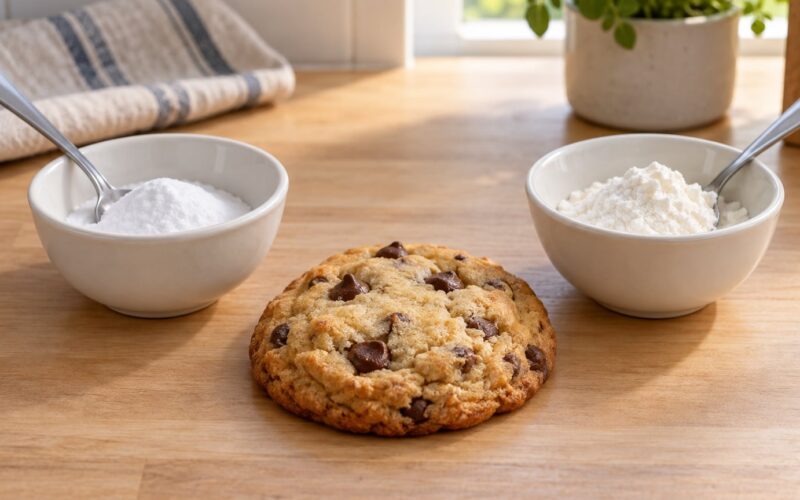
- Flour: All-purpose is the default. Bread flour gives extra chew. Measure by weight if you can (about 130 g per cup) so you do not accidentally under-measure.
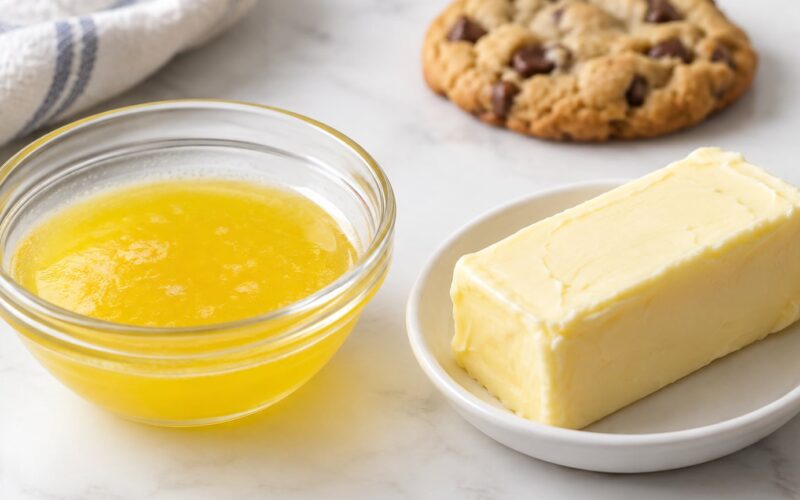
- Butter: Cool, not soft. About 65°F means it gives slightly when you press a finger but still holds its shape.
- Sugar: A mix of brown and white works best. More brown sugar means more moisture retention and a chewier, thicker center.
- Eggs: One whole egg plus one extra yolk. The yolk adds fat and emulsifiers without the extra water that whites bring.
- Leavener: Baking soda or baking powder, on the lower side of what is written (or call as 1/2 tsp baking soda — a good default for thick cookies).
- Optional add-ins: One to two teaspoons mixed into the dry ingredients for a softer, thicker texture. A tablespoon of milk powder does the same thing and boosts browning.
- Baking sheet: A heavy aluminum half sheet. Light or dark sheets run hot and brown the bottoms before the centers bake through.
- Liner: Parchment paper or a silicone baking mat. Never grease the pan — fat on the sheet is an invitation to spread.
- Cookie scoop: A medium scoop (roughly 2 tablespoon / 40 g of dough) gives bakery-style height. A small scoop (1 tablespoon) makes thinner cookies.
- Optional but helpful: A small block of cream cheese (about 2 oz) swapped in for some of the butter adds tenderness while keeping the dough thick.
Step-by-Step: How to Make Cookies Thicker
1. Cream cool butter with sugars just until combined
Beat the cool butter with both sugars on medium for about 45 to 60 seconds. You want the mixture to look like wet sand with small pebbles, not a fluffy, pale cloud. Over-creaming whips in air, and that air expands in the oven before the structure sets — the cookie puffs, then slumps flat. Stop the moment the butter and sugar look like they have met.
2. Add one whole egg plus one extra yolk
Beat in the whole egg first, let it fully disappear into the butter, and then add the extra yolk. The extra yolk adds fat and lecithin without adding the extra water an extra white would bring. That keeps the dough thick and the crumb tender. Reviewers on baking forums consistently call out the yolk trick as the single biggest difference between flat and tall cookies.
3. Add an extra 2 tablespoons of flour
Whatever the recipe says, add 2 extra tablespoons of flour on top. This tightens the dough just enough that the cookies hold their shape instead of puddling. If you bake at high altitude or on a humid day, lean toward 3 tablespoons. You will know you are close when the dough barely sticks to your fingers when you press a scoop.
4. Chill the dough for 30 to 60 minutes
Scoop the dough into tall balls first, then chill on a plate or small tray. 30 minutes is enough to firm the butter; 60 minutes gives deeper, almost toffee-like flavor. Longer is fine — overnight is even better. Bakers on r/Baking report that 2+ hours of chill is often what finally fixes a chronic flat-cookie problem.
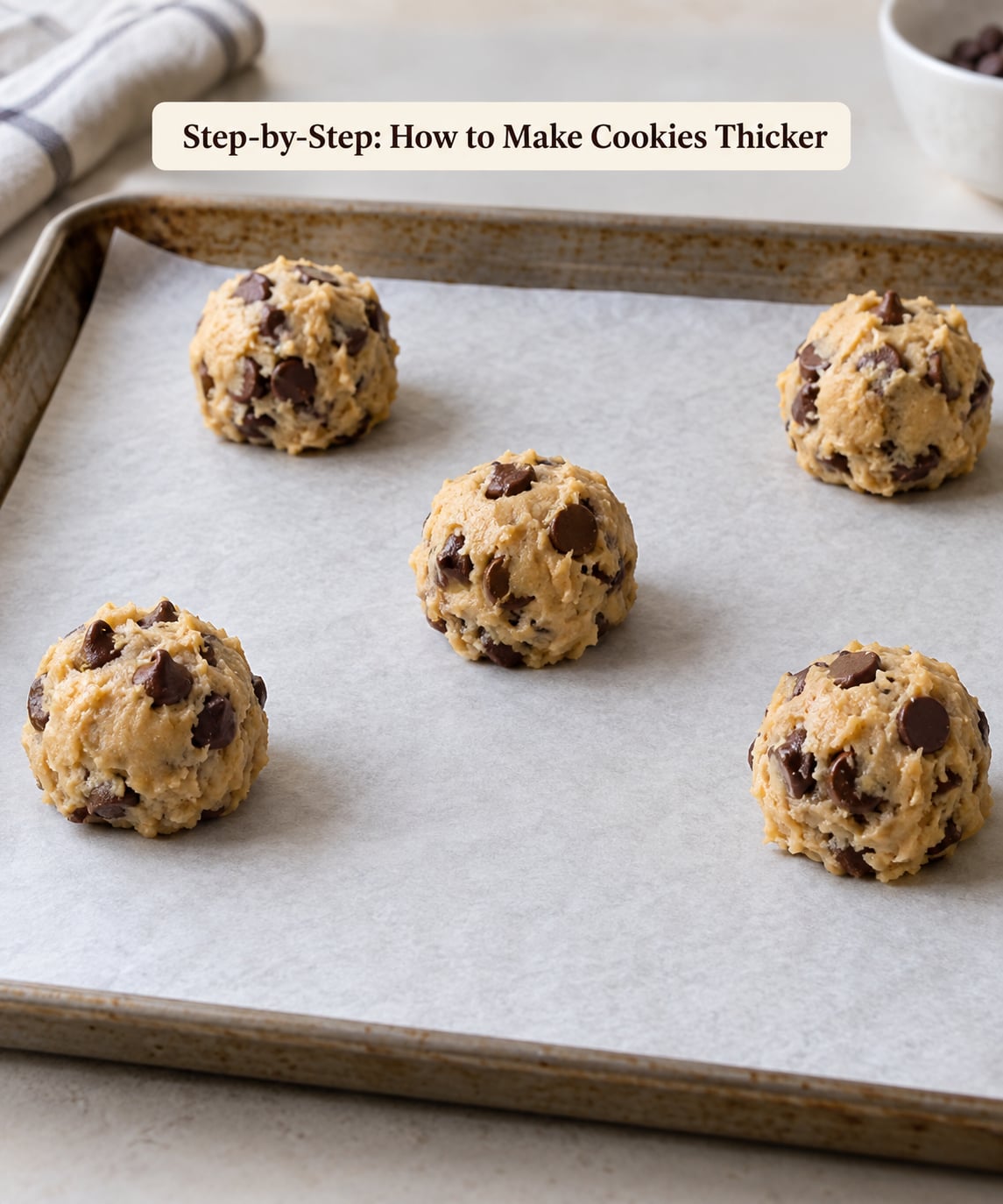
5. Scoop tall balls and press down only slightly
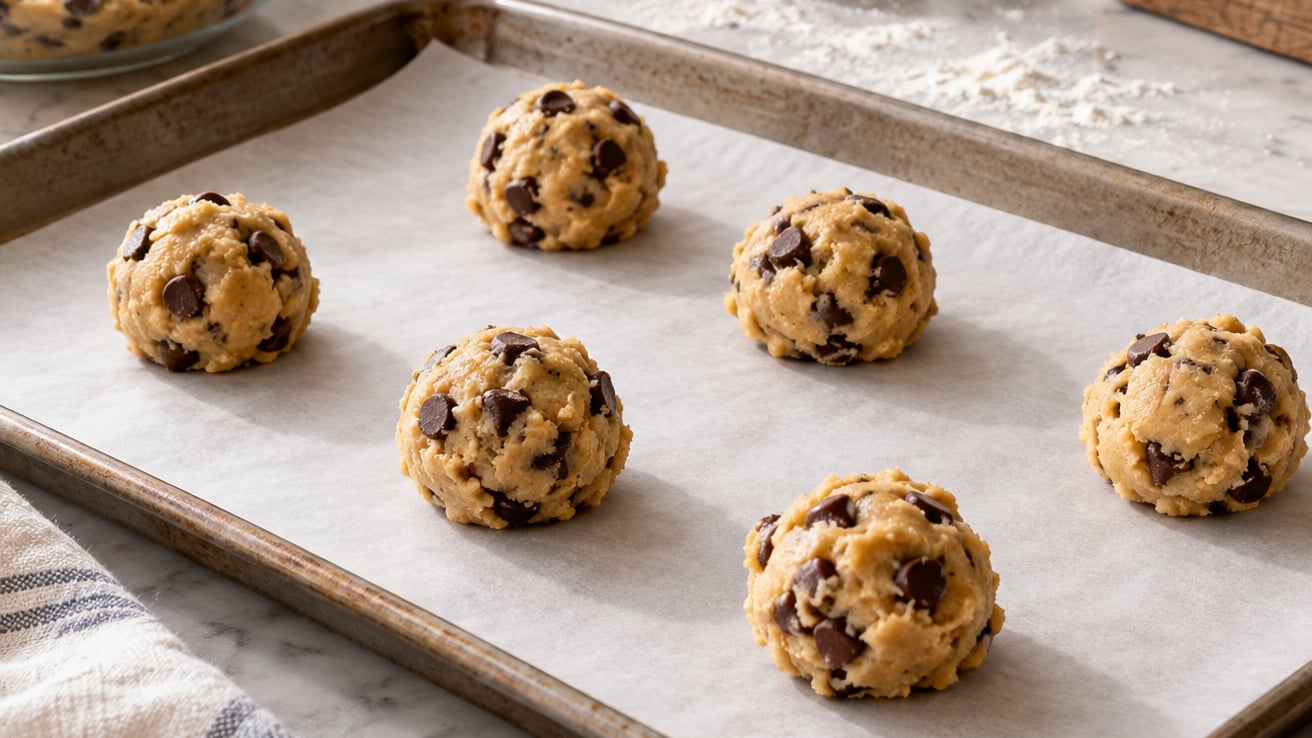
Use a medium cookie scoop (about 40 g / 2 tablespoon of dough) and stack the dough tall rather than rolling it short. Press down just enough that the ball has a flat bottom and a domed top — about halfway. A tall mound bakes into a tall cookie. A short, wide mound bakes into a thin, wide one.
6. Bake at 375°F on parchment until edges are set
Heat the oven to 375°F (a few recipes call for 400°F for a faster set; either works). Bake on parchment for 9 to 11 minutes, until the edges look set and the centers still look slightly underdone. Pull the tray and let the cookies finish on the sheet for 5 minutes before transferring — they keep baking from carryover heat and set up into thick, bakery-style domes.
Common Mistakes That Make Cookies Flat (and How to Fix Them)
Even with the right recipe, a few small missteps send cookies straight to flatland. These are the five I see most often, with the one-line fix for each.
Butter too soft. If your finger sinks into the butter with no resistance, it is too soft. The fix: cool it back down to about 65°F in the fridge for 10 to 15 minutes before creaming. Reviewers report a dramatic difference between fully softened butter and butter that is just barely cool to the touch.
Skipping the chill. Warm dough melts fast. The fix: chill the scooped balls for at least 30 minutes, longer if your kitchen is warm or humid. On hot summer days, bakers on r/AskBaking swear by 20 minutes in the freezer as a substitute.
Greasing the pan. Fat on the sheet is a slide-and-spread guarantee. The fix: use parchment paper or a silicone mat, and never grease the sheet. The slight grip is exactly what you want.
Over-measuring flour (or under-measuring sugar). Both throw off the ratio. The fix: weigh the flour (about 130 g per cup), and measure sugar by packing brown sugar firmly and leveling white sugar with the back of a knife.
Baking on a hot or dark sheet. Dark pans absorb heat and brown the bottoms before the centers bake. The fix: use a light aluminum half sheet, and let it cool fully between batches. If your oven runs hot, an oven thermometer is the cheapest upgrade you can make.
A few bonus tips round out the toolkit: add 1 teaspoon of cornstarch to the dry ingredients for extra thickness and softness; a tablespoon of milk powder boosts browning and chew; and stacking the dough tall with a medium scoop is the single fastest way to get bakery-style height without changing a single ingredient.
Frequently Asked Questions
Does chilling cookie dough really make cookies thicker?
Yes, chilling is one of the most reliable ways to make cookies thicker. Cold dough holds its shape longer in the oven so the flour-and-egg structure sets before the butter melts. A 30-minute chill firms the butter, while 60 minutes or overnight also deepens the flavor. On hot or humid days, 20 minutes in the freezer works in a pinch.
Should I use melted or softened butter for thicker cookies?
For thicker cookies, use butter that is cool, not softened or melted. Aim for about 65°F, where the butter gives slightly when pressed but still keeps a fingerprint. Softened butter melts too fast in the oven and the cookies spread before structure sets. Melted butter, used deliberately, makes a different style of chewy cookie entirely.
Why are my cookies still flat after I chilled the dough?
A few usual suspects: the butter was too warm before it went into the fridge, the oven runs hot so the butter melts before the flour sets, or the scoop is too small so the dough spreads before it rises. Try a cooler butter start, an oven thermometer to confirm true temperature, and a taller, larger scoop. A teaspoon of cornstarch also helps lock in height.
Can I use bread flour instead of all-purpose flour for thicker cookies?
Yes, and bread flour often produces a thicker, chewier cookie because it has more protein, which builds stronger gluten. Use it as a 1:1 swap for all-purpose flour. If the dough feels dry, add a teaspoon of milk or an extra yolk. Unbleached all-purpose works fine too; just rely a little more on the chill and a tall scoop for height.
How do I fix cookie dough that already turned out too thin and spread?
The fastest rescue is to chill the dough until firm, then reshape the balls taller and add a tablespoon or two of flour before re-scooping. If cookies have already come out flat, the cookie-cutter trick works: while the cookies are still hot on the sheet, press a round cutter around each one to nudge the edges inward. They reset as they cool into a thicker shape.
Conclusion
The single biggest change is to chill the dough and use one extra egg yolk — those two moves alone fix most flat-cookie problems. From there, a medium scoop stacked tall and a 375°F oven turn the method into bakery-style cookies you can pull off in any kitchen.