Flat chocolate chip cookies almost always come down to one thing: the butter melts before the flour and egg proteins can set the structure. Once that fat liquefies on a warm sheet pan, the dough has nowhere to go but outward, and you end up with thin, lacy disks instead of thick, bakery-style cookies. The good news is that every cause has a specific fix, and you usually only need to change one or two habits to get puffy, chewy results.
After years of chasing the perfect thick cookie in my own kitchen (and eating a lot of sad, paper-thin test batches along the way), I’ve learned that the same handful of culprits shows up over and over. Here are the 11 most common reasons chocolate chip cookies go flat, and exactly what to do about each one.
Table of Contents
- What Makes a Chocolate Chip Cookie Flat in the First Place
- Your Butter Is Too Soft or Melted
- Too Much Sugar or the Wrong Sugar Ratio
- Not Enough Flour or Inaccurate Measuring
- Skipping the Chill Time
- A Hot Baking Sheet or Warm Oven
- Too Much Baking Soda
- Overmixing or Over-Creaming the Butter and Sugar
- Too Much Butter or Oil in the Dough
- High Altitude or Humid Kitchen
- The Baking Sheet Matters Too
- Quick Troubleshooting Checklist
- Frequently Asked Questions
- How do I fix chocolate chip cookies that are already flat?
- Does adding more flour to cookie dough make it thicker?
- Why does the first tray of cookies always spread more than the rest?
- How long should I chill chocolate chip cookie dough for thick cookies?
- Is bread flour better for preventing flat cookies?
- Does using salted or unsalted butter change how flat I get?
What Makes a Chocolate Chip Cookie Flat in the First Place
A cookie sets in two stages. First, the fat melts, then the flour proteins and egg coagulate and the sugars caramelize, locking the shape in place. When the first stage runs ahead of the second, the dough slumps into a thin disk before anything can hold it up.
Anything that speeds up the melting, or slows down the setting, makes cookies flatter. Warm butter, too little flour, lots of white sugar, a hot pan, skipping the chill, and too much leavener all push in that direction. Most flat-cookie problems are really a timing issue between melt and set, and the fixes below are all about nudging that balance back toward a thick, chewy result.
Your Butter Is Too Soft or Melted
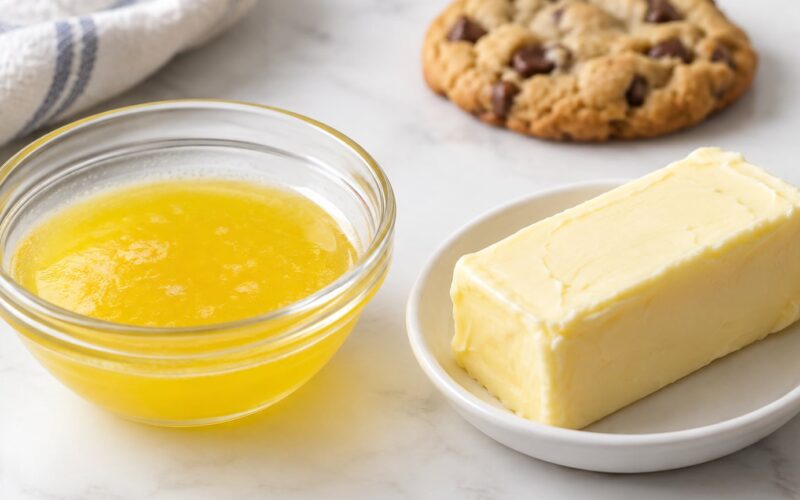
Butter temperature is the single biggest lever you have. Cold butter keeps cookies thick, room-temp butter gives a normal spread, and soft or melted butter gives you those greasy, paper-thin disks that drive people to ask why their cookies came out flat.
The sweet spot for most chocolate chip cookie recipes is butter around 65 to 67°F, which feels cool to the touch and dents only slightly when you press it. If your kitchen runs warm or you softened butter in the microwave, it has likely crept well above 70°F and the fat is already starting to melt before the dough even hits the oven. The fix is to chill the dough for at least 30 minutes (longer is better) so the butter firms back up before baking. If you accidentally melted the butter, pop the bowl in the fridge for 20 minutes until it firms to a soft paste before continuing.
Too Much Sugar or the Wrong Sugar Ratio
Sugar does more than sweeten. White sugar liquefies in the oven and encourages spread, while brown sugar contains molasses, which adds moisture and acidity and helps cookies rise and stay chewy. A recipe heavy on white sugar, or one where you’ve added an extra quarter-cup, will spread far more than intended.
If your cookies keep coming out flat, try shifting the ratio toward brown. Swapping half the white sugar for brown is a common starting point for thicker cookies. You can also reduce total sugar by about two tablespoons per batch; the cookies will bake up thicker and taste more buttery, though slightly less sweet. Measure sugar by scooping into the cup and leveling with a straight edge, since packed brown sugar adds a surprising amount.
Not Enough Flour or Inaccurate Measuring
Flour is the structure builder. Too little of it, and there’s not enough protein and starch to set the dough before it spreads. Even a couple of tablespoons short can make the difference between thick and thin.
The most common measuring mistake is dipping the measuring cup directly into the flour bag, which compacts it and leaves you with up to 25% more flour than a recipe calls for (or, when you’re trying to be careful, less than you need because you’ve shaken it loose and scooped air). The reliable method is to spoon flour into the cup and level it with a knife, or better yet, weigh it on a kitchen scale. Most all-purpose flour weighs about 120 grams per cup. If you’ve been going by volume and your cookies keep spreading, switching to a scale is often the single most effective change.
Skipping the Chill Time
Chilling the dough is not optional if you want thick cookies. A 30 to 60 minute rest in the fridge firms the butter, hydrates the flour so it absorbs liquid more fully, and deepens the flavor as the sugars dissolve. Skipping it, especially in a warm kitchen, is a guaranteed path to a flat batch.
As a minimum, chill the dough for 30 minutes. For best results with a standard dough, give it 1 to 2 hours. If your dough feels especially soft or your kitchen is above 75°F, lean toward 4 hours or even overnight. A long chill is also one of the easiest ways to get a more complex, toffee-like flavor in addition to better shape. Roll the dough into balls before chilling so it’s ready to bake straight from the fridge.
A Hot Baking Sheet or Warm Oven
Dropping dough onto a hot sheet pan is like starting the race already mid-stride. The butter melts on contact and the cookie spreads before the oven heat can set the edges. This is also why the first tray of cookies often comes out flatter than the rest: the pan has had time to heat up between batches.
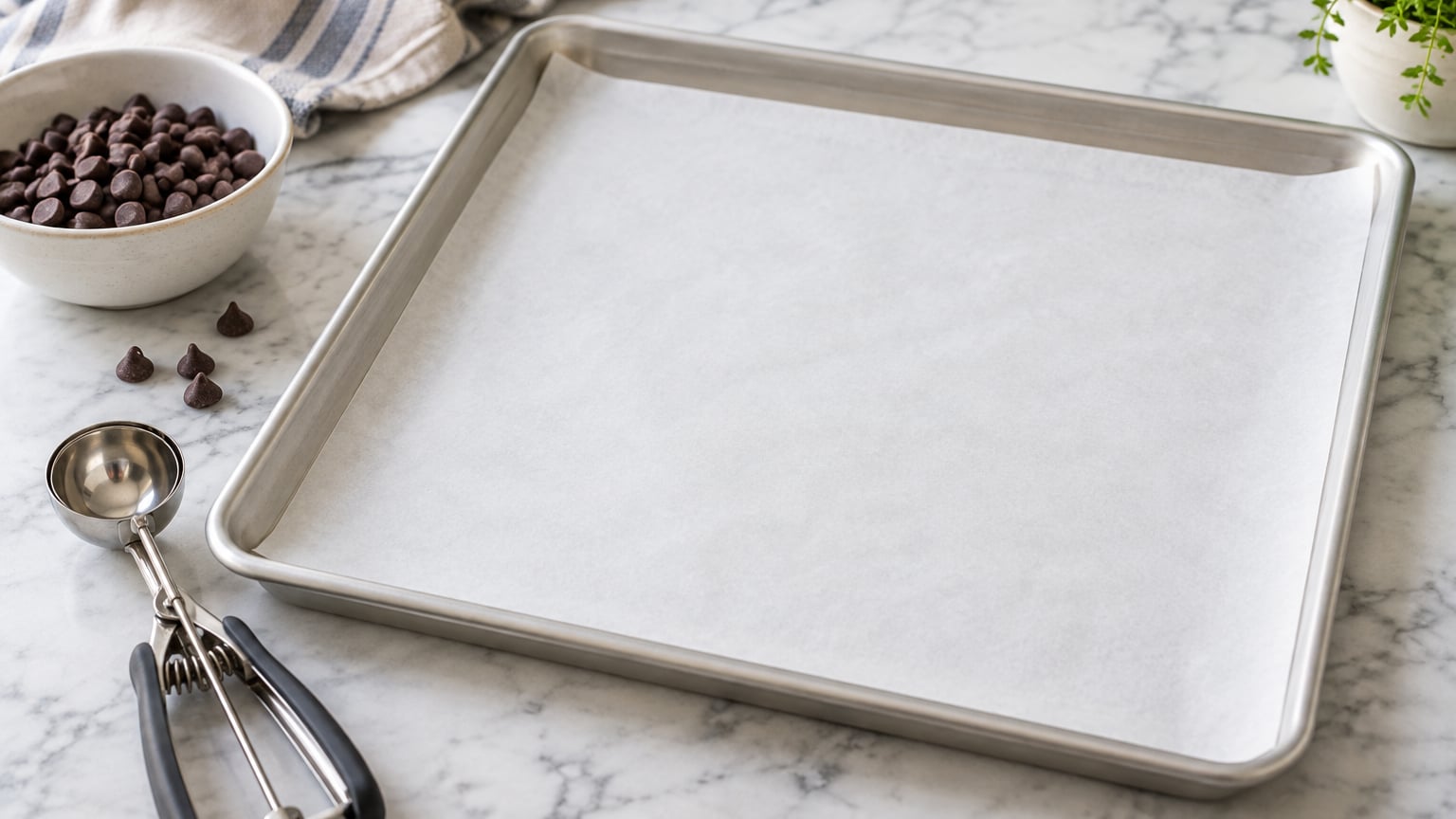
For thicker cookies, use a cool or room-temperature sheet every time. If you’re baking multiple trays, keep the second one in the fridge while the first bakes, or run it under cool water and dry it well. A light-colored aluminum sheet lined with parchment paper gives you the most predictable, even heat. Avoid dark or thin pans, which conduct heat aggressively and brown the bottoms before the centers set.
Too Much Baking Soda
Both baking soda and baking powder are leavening agents, and they are not interchangeable in cookies. Baking soda reacts with the acidic brown sugar and starts producing carbon dioxide the moment it meets wet ingredients; baking powder contains its own acid and reacts in two stages, some during mixing and more with heat.
Too much of either makes cookies rise fast, then collapse and spread before they set. If your recipe calls for a teaspoon of baking soda and you’ve been heavy-handed, or if the soda is more than six months old and you doubled up to compensate, the cookies will puff tall in the oven and then sink into thin, wrinkled disks. Level the measuring spoon, check the date on the canister, and replace any leavener that’s been open for more than a year. For most chocolate chip cookie recipes, a half teaspoon of baking soda plus a half teaspoon of baking powder gives a balanced lift.
Overmixing or Over-Creaming the Butter and Sugar
Creaming butter and sugar is meant to whip tiny air bubbles into the fat, which gives cookies a tender, slightly puffed texture. The trouble starts when you keep the mixer running too long, or beat at high speed. Extra air inflates the cookies, and once the structure gives way in the oven, all that air escapes as a wide, flat spread.
Aim for 1 to 2 minutes of creaming on medium speed, just until the mixture looks pale and fluffy and the sugar has mostly dissolved. Once you add the flour, mix on low only until the streaks disappear; any longer develops gluten, which can make cookies tough, and warms the dough through friction, softening the butter. If you find the dough is noticeably warm after mixing, chill it before scooping.
Too Much Butter or Oil in the Dough
Fat is what makes cookies tender and rich, but it’s also what makes them spread. Doubling a recipe, accidentally adding an extra stick of butter, or substituting oil for butter (or butter for shortening without adjusting) can push the fat ratio past the point where flour can hold it. The result is a greasy, thin cookie that often bakes up with darker, lacy edges.
If you suspect an over-fatty batch, the easiest rescue is to mix in a couple of extra tablespoons of flour, then chill the dough for at least an hour so the flour absorbs the extra liquid. If you doubled a recipe by accident, the same fix works at scale: add roughly 10% more flour by weight, then chill thoroughly. Going forward, measure butter by the tablespoon markings on the wrapper rather than eyeballing, especially with European-style butters that come in slightly different stick sizes.
High Altitude or Humid Kitchen
Environment quietly changes how cookie dough behaves. Above about 3,000 feet, lower air pressure lets leavening agents expand more aggressively, which can cause cookies to rise fast, then collapse and spread. A humid kitchen adds extra moisture to flour and butter, throwing off the liquid-to-flour balance in the other direction.
For high altitude, reduce baking soda or powder by about a quarter teaspoon, increase flour by a tablespoon or two, and consider lowering the oven temperature by 25°F with a slightly longer bake. For humid days, weigh your flour rather than measuring by volume, and chill the dough longer; the cold firms the butter against the damp air. If your kitchen is warm year-round, working in short bursts and returning the dough to the fridge between trays keeps everything in the safe zone.
The Baking Sheet Matters Too
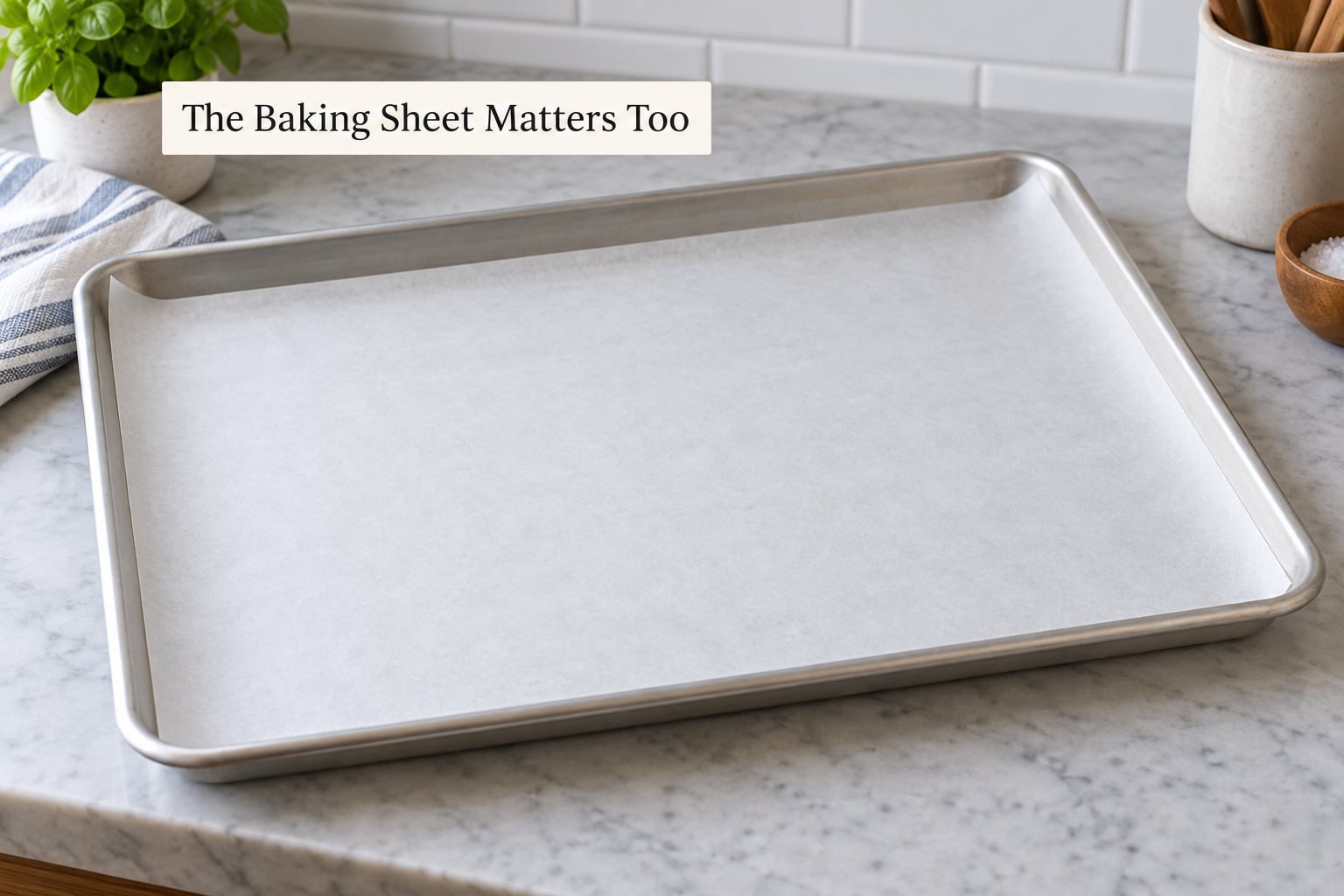
Not all sheet pans bake the same. Dark nonstick pans absorb more radiant heat and crisp the bottoms early, which speeds spread. Thin, lightweight pans warp in the oven and create hot spots. Older pans with darkened surfaces do the same. Any of these can leave you with cookies that look underdone in the center while the edges are already thin and brown.
A heavy-gauge, light-colored aluminum half sheet (the kind restaurants use) gives the most consistent results. Line it with parchment paper for easy release and even browning, or use a silicone baking mat if you have one. Avoid greasing the pan for most cookie recipes; the extra fat on the surface is a thin layer of lubrication that encourages exactly the spread you’re trying to prevent. If you’ve been baking on a dark, well-seasoned, or warped pan, switching to a new light-colored half sheet often fixes chronic flatness on its own.
Quick Troubleshooting Checklist
If your last batch came out flat, run through this list before tweaking the recipe. Most flat-cookie problems trace back to two or three of these at most.
- Butter was too soft: it should dent slightly at 65 to 67°F, not feel greasy
- Sugar ratio leans too white: try swapping a quarter-cup white for brown
- Flour was measured loosely: switch to a scale at 120g per cup, or spoon and level
- Dough wasn’t chilled: rest it 30 minutes minimum, 2 hours ideal
- Sheet pan was hot: use a cool, parchment-lined sheet for every batch
- Too much baking soda or powder: level the spoon and check the date
- Over-creamed butter and sugar: stop at 1 to 2 minutes, mix flour in on low
- Extra butter or oil by accident: add a tablespoon of flour and re-chill
- High altitude or humid kitchen: reduce leavener slightly, weigh flour, chill longer
- Dark, thin, or warped pan: switch to a heavy, light-colored half sheet
- Oven runs hot or cold: verify with an oven thermometer before adjusting time
Pick the one or two that most closely match what you did last time. Often, fixing the butter temperature plus a proper chill is enough to flip a chronic flat-cookie habit into thick, chewy results.
Frequently Asked Questions
How do I fix chocolate chip cookies that are already flat?
Once cookies cool, their shape is set, so you cannot un-flatten a baked batch. The good news is you can repurpose them: crumble them over ice cream, layer them into a no-bake icebox cake, or pulse them in a food processor with a few tablespoons of softened butter and press the mixture into a pan for a quick cookie crust. Going forward, chill the dough longer, add a tablespoon of flour, and bake on a cool, parchment-lined sheet to prevent the next batch from spreading.
Does adding more flour to cookie dough make it thicker?
Yes, up to a point. Flour provides the structure that holds cookies together in the oven, so adding one to two extra tablespoons per batch can noticeably reduce spread. The key is to add it gently at the end of mixing, just until no streaks remain, and then chill the dough so the extra flour fully hydrates. More than a few extra tablespoons will make the cookies dry and cakey rather than thick and chewy.
Why does the first tray of cookies always spread more than the rest?
The first tray usually goes onto a sheet that has been sitting out or even warming in the kitchen while you portioned the dough, so the butter starts melting the moment it touches the pan. The second and third trays often bake on a cooler pan if you’ve been rotating them in and out of the oven. To even things out, start with a cool sheet, keep the next one in the fridge between batches, and let the pan cool completely before portioning the next round.
How long should I chill chocolate chip cookie dough for thick cookies?
A minimum of 30 minutes will firm the butter and noticeably reduce spread, while 1 to 2 hours is the sweet spot for most home bakers. A long overnight chill, up to 48 hours, gives the most complex flavor and the thickest cookies because the flour fully hydrates and the butter stays very firm. If your dough feels sticky or your kitchen is warm, lean toward the longer end of that range.
Is bread flour better for preventing flat cookies?
Bread flour has more protein than all-purpose, which means it develops more gluten and gives cookies extra structure. Swapping in bread flour, or using a half-and-half blend of bread and all-purpose, often produces taller, chewier cookies that hold their shape better. The trade-off is a slightly denser texture, so if you prefer a tender, melt-in-your-mouth cookie, all-purpose plus a proper chill is usually the better path.
Does using salted or unsalted butter change how flat I get?
The salt itself does not really affect spread, so salted versus unsalted is mostly a flavor choice. What matters more is the butterfat percentage: European-style butters with 82 to 84% fat produce a slightly more tender, spread-prone cookie than standard American butter at 80%. If you bake with a high-fat butter and notice flat cookies, reduce the amount by about a tablespoon per cup or chill the dough longer to compensate.
If your chocolate chip cookies have been coming out flat, start with the two changes that fix most batches: get your butter to 65 to 67°F and chill the dough for at least an hour. Once those two habits are dialed in, the rest of the small tweaks (flour by weight, brown sugar for some of the white, a cool sheet pan) start adding up to the thick, chewy cookies you were after in the first place.