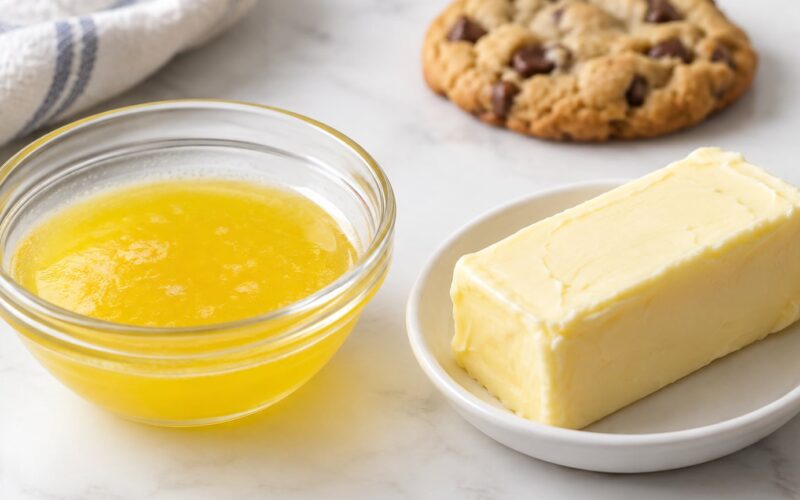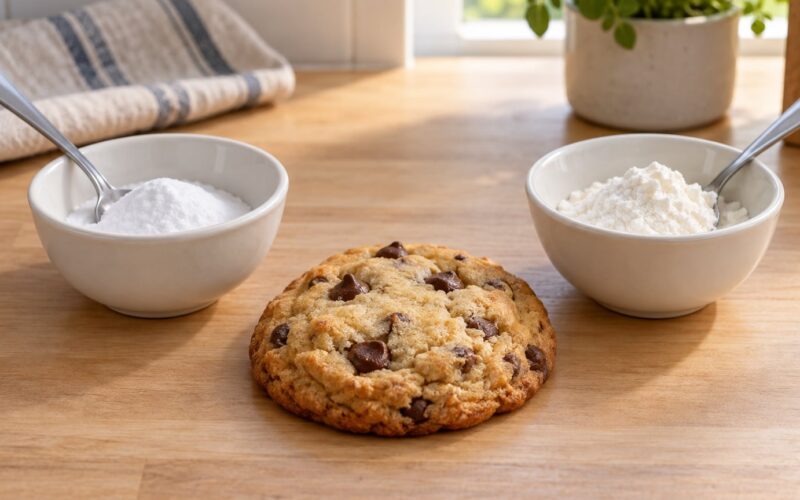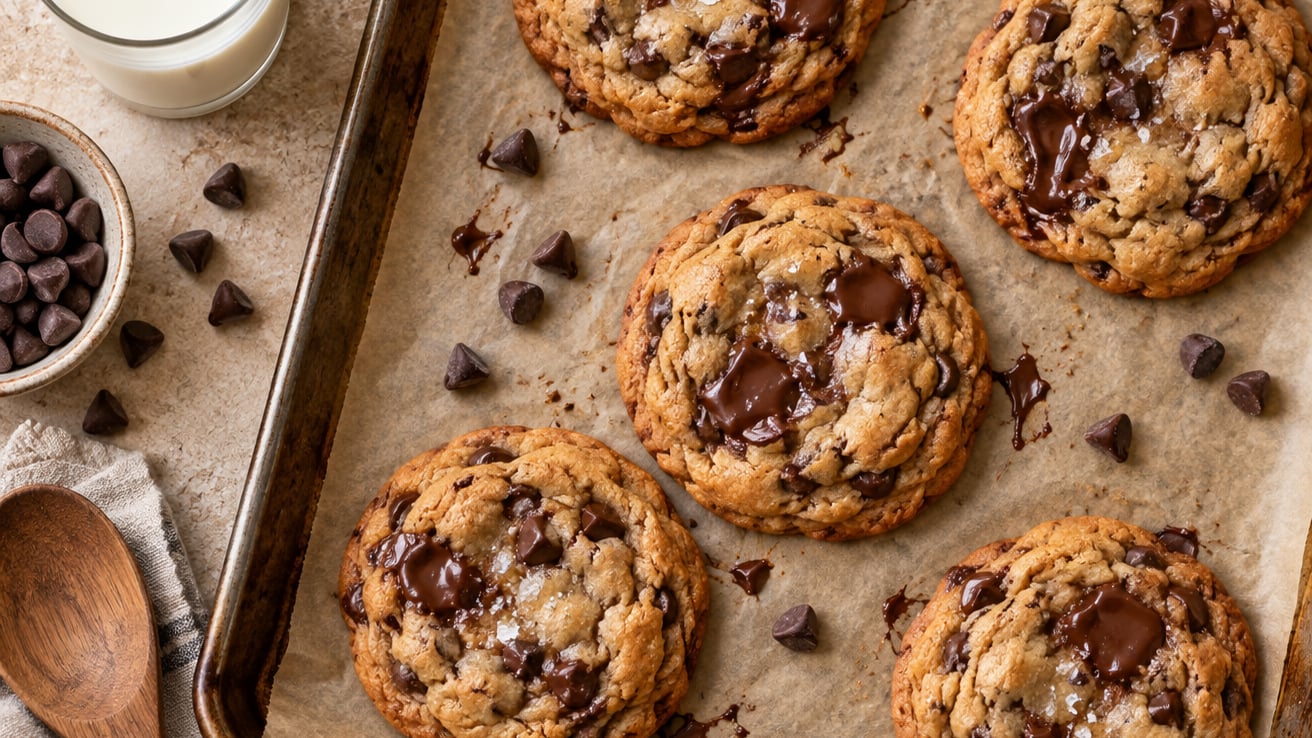
The best chewy chocolate chip cookies have soft, bendable middles, golden crisp edges, and pockets of melted chocolate in every bite. The secret is a higher brown sugar to white sugar ratio, melted (not softened) butter, an extra egg yolk, a spoon of cornstarch, and a mandatory 30 to 60 minute dough chill. The full batch takes about 15 minutes of active time, 12 minutes in the oven, and an easy skill level that any home baker can handle.
Table of Contents
- What Makes a Chocolate Chip Cookie Chewy
- What You Need
- Step-by-Step: How to Make Chewy Chocolate Chip Cookies
- 1. Melt the butter and whisk in the sugars
- 2. Beat in the egg, yolk, and vanilla
- 3. Whisk the dry ingredients separately
- 4. Combine wet and dry just until the streaks disappear
- 5. Fold in the chocolate
- 6. Chill the dough for 30 to 60 minutes
- 7. Scoop onto a parchment-lined sheet and bake
- 8. Cool on the pan, then on a rack
- Common Mistakes and How to Fix Them
- Tips for the Chewiest Cookies Every Time
- Frequently Asked Questions
- Why are my chocolate chip cookies flat instead of chewy?
- How long should I chill chocolate chip cookie dough?
- Can I make chewy chocolate chip cookies without a stand mixer?
- What type of chocolate gives the best flavor in chewy cookies?
- How do I store chewy chocolate chip cookies so they stay soft?
- Can I freeze chocolate chip cookie dough or baked cookies?
What Makes a Chocolate Chip Cookie Chewy
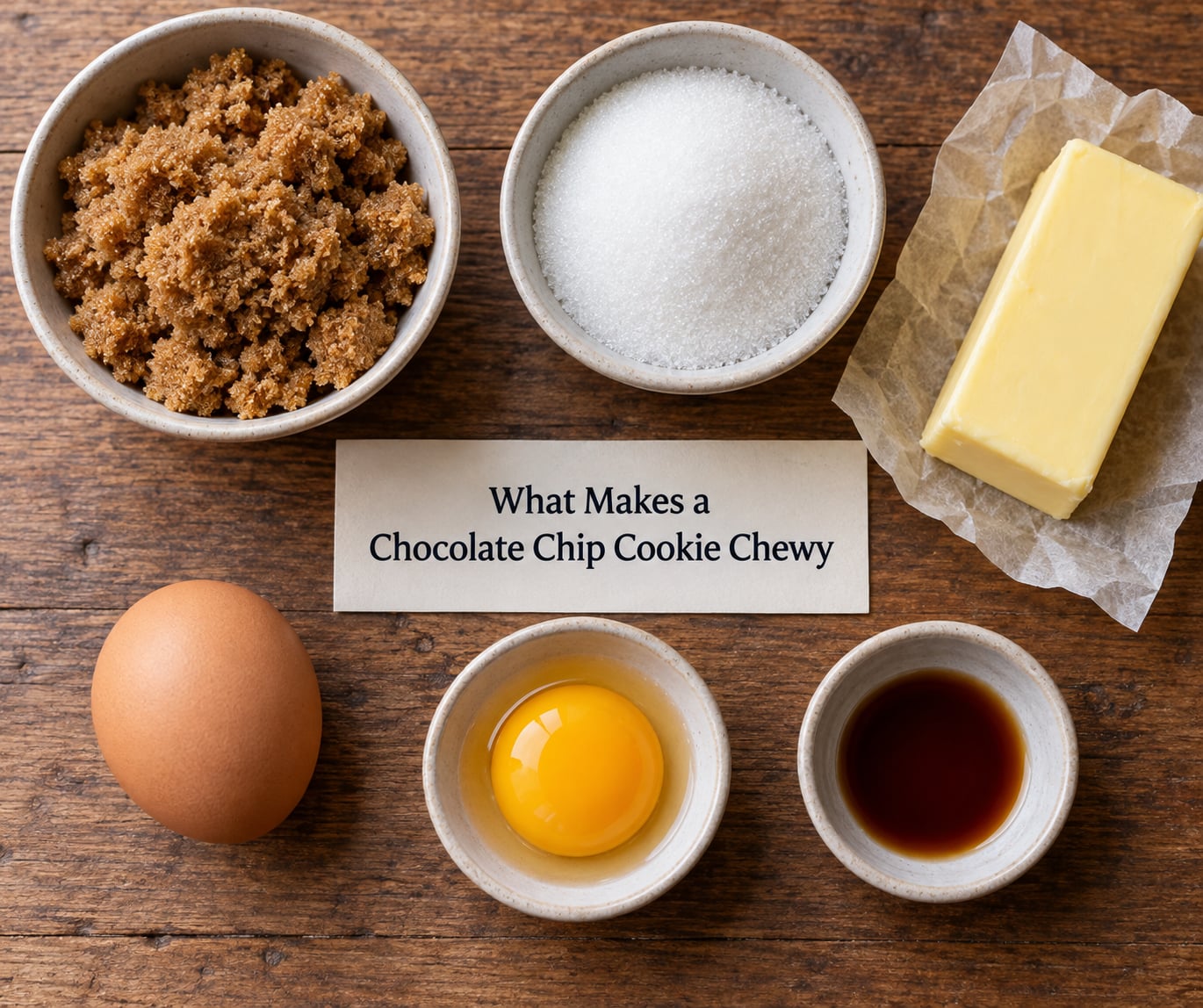
Chewiness comes from four levers, and once you understand them, you can fix almost any cookie problem in a single batch.
Brown sugar ratio. Brown sugar carries molasses, which adds moisture and keeps the interior soft. A higher brown-to-white ratio (about 1.5 to 1 or even 2 to 1) gives the chewiest results. White sugar spreads the cookie and crisps the edges, which is why we keep some in the mix.
Butter temperature. Melted butter coats the flour differently than softened butter, which means less gluten develops and the cookie stays tender. Melted butter also traps steam as the cookie bakes, giving a denser, fudgier center.
Flour amount. Too much flour is the most common reason a chewy cookie turns cakey or dry. Spoon and level your flour (or weigh it) instead of scooping straight from the bag, which can pack in 20 percent more than the recipe calls for.
Egg yolk versus whole egg. A whole egg plus an extra yolk adds fat and richness without the extra liquid that whites would bring. That extra fat coats the flour and slows gluten formation, which keeps the cookie chewy instead of tough.
Cornstarch is a quiet hero here. A single teaspoon softens the crumb and gives the cookie that bakery-style bend. Plan for 15 minutes of prep, 12 minutes of baking, and 30 to 60 minutes of chilling. Total time commitment: about an hour, mostly hands-off.
What You Need
Everything below fits one standard sheet pan of about 18 large cookies. Double the recipe if you want a batch for the freezer, since raw dough balls freeze beautifully.
Ingredients
- 1 cup (226 g) unsalted butter, melted and slightly cooled
- 1 cup (200 g) packed light brown sugar
- 1/2 cup (100 g) granulated sugar
- 1 large egg, plus 1 extra egg yolk
- 2 teaspoons pure vanilla extract
- 2 cups (250 g) all-purpose flour, spooned and leveled
- 1 teaspoon cornstarch
- 1 teaspoon baking soda
- 1 teaspoon fine sea salt
- 1.5 cups (270 g) semi-sweet chocolate chips or chopped chocolate
Equipment
- Stand mixer with paddle attachment, or a large mixing bowl and a hand mixer
- Half sheet pan (18 by 13 inches)
- Parchment paper or a silicone baking mat
- Medium cookie scoop (about 2 tablespoons)
- Wire cooling rack
- Small microwave-safe bowl for melting the butter
Step-by-Step: How to Make Chewy Chocolate Chip Cookies
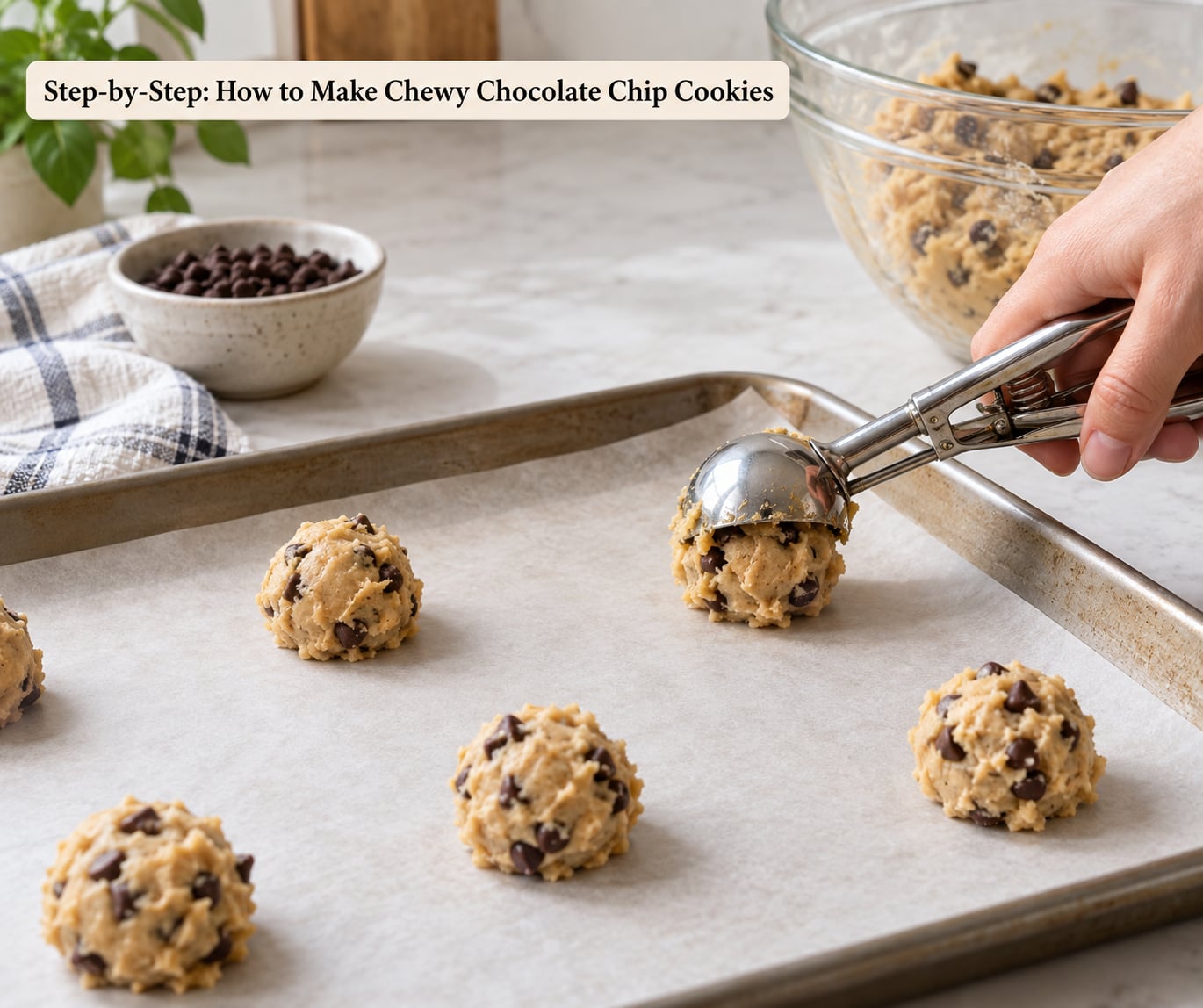
Follow these steps in order and resist the urge to skip the chill. The rest time is what separates a good cookie from a great one.
1. Melt the butter and whisk in the sugars
Melt the butter in the microwave in 20 second bursts, or in a small saucepan over low heat, until just liquid. Let it cool for 5 minutes so it does not scramble the egg later. Pour into your mixing bowl and add both sugars. Whisk by hand for about 60 seconds, until the mixture looks glossy and slightly thickened. You will see the brown sugar start to dissolve into the butter.
2. Beat in the egg, yolk, and vanilla
Add the whole egg, the extra yolk, and the vanilla. Whisk hard for 30 to 45 seconds until the batter looks smooth, a shade lighter, and slightly ribbony. This step builds the structure of the cookie, so do not shortcut the whisking.
3. Whisk the dry ingredients separately
In a small bowl, whisk together the flour, cornstarch, baking soda, and salt. Cornstarch softens the crumb, baking soda gives gentle spread and browning, and salt sharpens the chocolate flavor.
4. Combine wet and dry just until the streaks disappear
Add the dry mixture to the wet bowl in two additions, stirring with a spatula or mixing on the lowest speed. Stop as soon as you no longer see dry flour. Overmixing at this stage develops gluten, which is the fastest way to turn a chewy cookie cakey.
5. Fold in the chocolate
Stir in the chocolate chips (or chopped chocolate) with a spatula until they are evenly distributed. If you are using chopped bars, aim for a mix of small shards and larger chunks so every bite gets some melty chocolate and some textural bite.
6. Chill the dough for 30 to 60 minutes
Cover the bowl with plastic wrap and refrigerate for at least 30 minutes, or up to 48 hours. The dough should feel firm and cool to the touch. Chilling solidifies the butter, which prevents the cookies from spreading into thin puddles, and it gives the flour time to fully hydrate for a thicker, chewier bite.
7. Scoop onto a parchment-lined sheet and bake
Heat the oven to 350 degrees F (177 degrees C). Line your sheet pan with parchment paper. Scoop the dough into balls of about 2 tablespoons each, spacing them 2 inches apart. Press a few extra chocolate chips on top of each ball for that bakery look.
Bake for 10 to 12 minutes, until the edges are golden and the centers look glossy and just slightly underdone. The cookies will look puffy and a touch raw in the middle. That is exactly right.
8. Cool on the pan, then on a rack
Let the cookies sit on the hot pan for 5 minutes. They finish setting up from carryover heat and will firm up enough to lift without breaking. Transfer to a wire rack to cool completely, or eat warm with a glass of milk.
Common Mistakes and How to Fix Them
Even experienced bakers run into trouble. Here are the six problems I see most often, plus the specific fix for each.
Cookies spread into one giant sheet. The dough was too warm, the butter was too soft, or the pan was greased. Fix: chill the dough longer (an hour minimum), use melted but cooled butter, and always line with parchment instead of greasing the pan.
Cookies come out flat and thin. Not enough flour, too much sugar, or a hot baking sheet. Fix: weigh the flour (250 g for 2 cups), measure the sugar by packing the brown sugar firmly, and let the sheet pan cool completely between batches.
Cookies turn out cakey and puffy. Too much flour or too much leavening. Fix: spoon and level the flour, double-check that you used one teaspoon of baking soda (not a tablespoon), and skip the baking powder entirely.
Cookies are dry or crumbly. Overbaked or overmeasured flour. Fix: pull the cookies at 10 minutes, not 12, and start with 250 g of flour even if your bag says 2 cups equals 240 g. Different brands measure differently.
Cookies are crispy instead of chewy. Too much white sugar or too long in the oven. Fix: push the brown sugar up to 1.25 cups and pull the cookies when the centers still look glossy. They finish baking on the pan.
Chocolate chips sink to the bottom. Dough was too warm, or chips were ice cold straight from the freezer. Fix: chill the dough until firm, then toss the chips with a teaspoon of flour before folding them in.
Tips for the Chewiest Cookies Every Time
These small habits make a real difference, and most of them take only a few extra seconds.
Weigh the flour. A kitchen scale removes the guesswork. 250 g of all-purpose flour by weight gives consistent chewy cookies every time.
Use a mix of brown sugars. Light brown sugar gives the classic toffee flavor, and swapping in 1/4 cup of dark brown sugar adds extra moisture and a deeper molasses note.
Pull the cookies when the centers look underdone. A glossy, slightly wet center is the visual cue. The cookie finishes setting up on the pan as it cools.
Let them rest on the pan for 5 minutes. Moving them too early causes breakage, and the carryover heat finishes the bake.
Store with a slice of white bread. Slide a piece of bread into the airtight container. The cookies absorb the bread’s moisture and stay soft for days, while the bread hardens (and is great for breadcrumbs later).
Freeze unbaked dough balls for fresh-baked cookies anytime. Scoop the dough, freeze the balls on a sheet pan until solid, then transfer to a zip-top bag. Bake straight from the freezer, adding 1 to 2 extra minutes to the bake time.
Frequently Asked Questions
Why are my chocolate chip cookies flat instead of chewy?
Flat cookies usually mean the butter was too soft or the dough was warm when it went into the oven. Use melted but cooled butter, measure the flour by weight (250 g for 2 cups), and chill the dough for at least 30 minutes before baking. A hot sheet pan will also flatten the next batch, so let it cool between rounds.
How long should I chill chocolate chip cookie dough?
Chill the dough for 30 to 60 minutes for everyday baking. Longer chilling (up to 48 hours) deepens the flavor and gives an even thicker, chewier cookie because the flour has more time to fully hydrate. Skip the chill only if you want a thinner, crispier cookie.
Can I make chewy chocolate chip cookies without a stand mixer?
Yes. Melt the butter, then whisk the wet ingredients by hand in a large bowl. Use a fork or a sturdy spatula to stir in the dry ingredients just until no streaks of flour remain. A hand mixer works too, but skip the electric beaters entirely if you want to, and the cookies will turn out the same.
What type of chocolate gives the best flavor in chewy cookies?
A chopped dark chocolate bar (around 60 to 70 percent cacao) gives deeper, more complex flavor than standard chocolate chips, which are designed to hold their shape. Mix chopped chocolate with a handful of chocolate chips if you want both melty pools and defined chips in the same bite.
How do I store chewy chocolate chip cookies so they stay soft?
Cool the cookies completely, then store in an airtight container at room temperature with a slice of plain white bread. The bread keeps the cookies soft for 4 to 5 days. Avoid the fridge, which actually dries cookies out faster than the counter.
Can I freeze chocolate chip cookie dough or baked cookies?
Both freeze well. For dough, scoop into balls, freeze on a parchment-lined sheet until solid, then transfer to a freezer bag for up to 3 months. Bake from frozen, adding 1 to 2 extra minutes. Baked cookies freeze for up to 2 months in a zip-top bag; thaw at room temperature or warm briefly in a 300 degree F oven.
Start with the chill. Mix the dough, cover the bowl, and walk away for 30 minutes. By the time the oven is preheated, you will be scooping thick, glossy cookie dough onto a sheet pan and pulling out bakery-style chewy chocolate chip cookies in 12 minutes flat.