You can soften brown sugar in about 20 to 30 seconds with a microwave-safe bowl, a damp paper towel, and short bursts on high power. That is the fastest fix when rock-hard brown sugar is blocking a batch of cookies, and it works because the steam from the towel gently re-moistens the molasses coating each crystal. For sugar that has gone truly brick-like, plan on a slower method like bread or apple slices in an airtight container overnight.
This guide walks through six reliable ways to soften brown sugar quickly, plus the storage tricks that stop it from hardening in the first place. Every method uses items you already have in the kitchen.
Table of Contents
- What You Need
- Step-by-Step: How to Soften Brown Sugar Quickly
- Common Mistakes and How to Fix Them
- How to Keep Brown Sugar Soft Longer
- Frequently Asked Questions
- How long does it take to soften hardened brown sugar?
- Can you soften brown sugar in the microwave without melting it?
- Why does brown sugar get hard in the first place?
- Is it safe to use brown sugar that has hardened and been softened again?
- What is the best way to keep brown sugar soft after opening the bag?
- Conclusion
What You Need
Gather these basics before you start so you are not hunting through drawers with butter softening on the counter.
- Microwave-safe bowl (glass or ceramic works best)
- Damp paper towel or clean kitchen towel
- Plastic wrap or a microwave-safe plate to cover
- One slice of fresh bread, or a few apple slices
- Airtight container with a tight-fitting lid (a glass jar or sturdy zip-top bag)
- Oven-safe baking sheet or dish for the oven method
- Food processor, blender, or hand grater for rock-hard blocks
- Terra cotta brown sugar keeper (soaked disc) for long-term storage
Light brown and dark brown sugar both respond to the same methods, though dark brown holds a touch more moisture and usually softens faster.
Step-by-Step: How to Soften Brown Sugar Quickly
Start with the first method if you are mid-recipe and short on time. Work your way down the list as the urgency drops and the sugar stays rock hard.
1. Microwave with a Damp Paper Towel
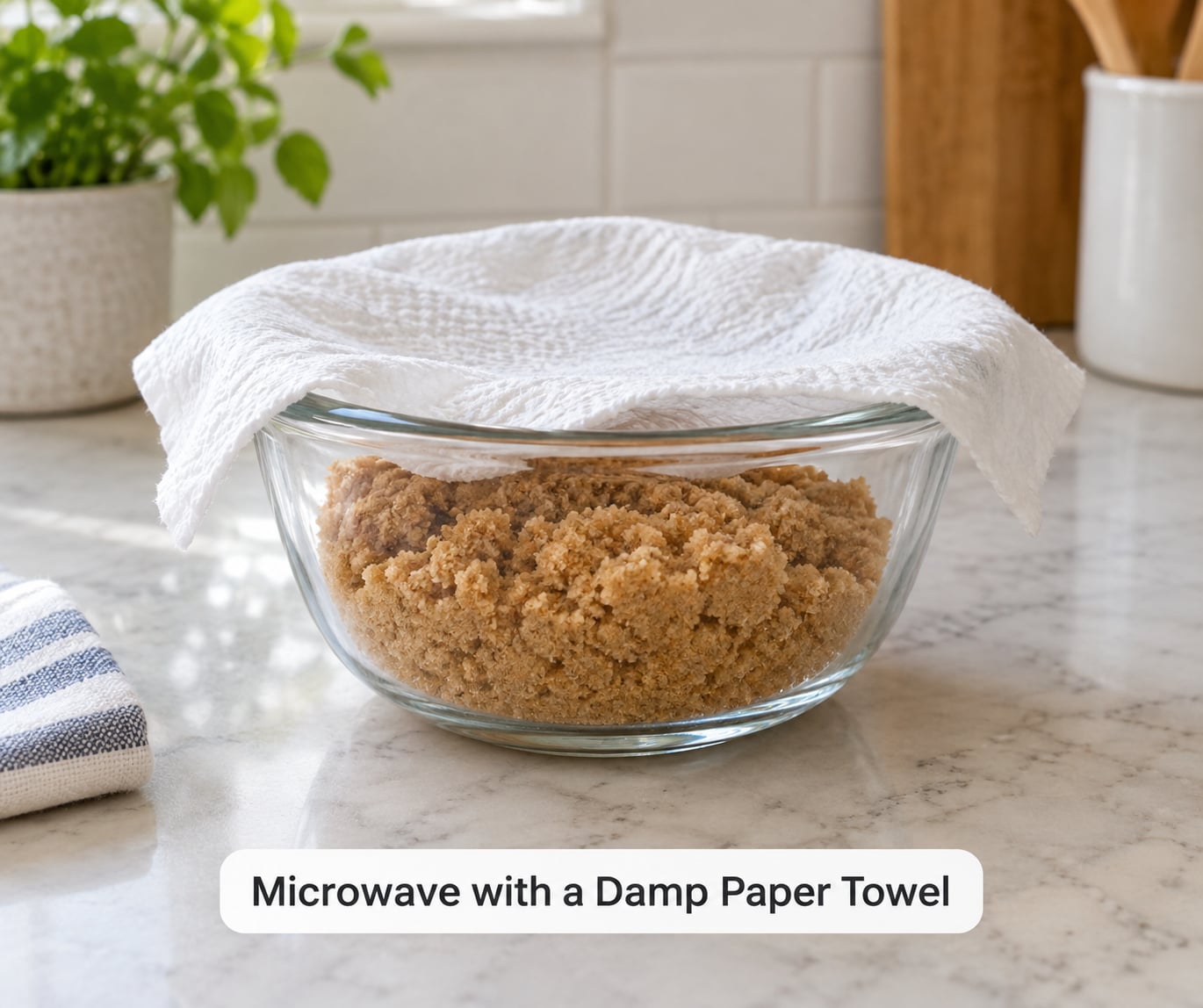
This is the fastest way to soften brown sugar, and it is the one I reach for first. The damp towel creates a small steam cloud inside the bowl, and that steam re-moistens the dried molasses without melting the crystals.
Place the hardened sugar in a microwave-safe bowl and break it up with a fork as much as you can. Lay a damp (not dripping) paper towel over the top and microwave on high in 20-second bursts. After each burst, check the sugar with your fingers and fluff it with a fork. Most brown sugar softens fully in two or three bursts, so 40 to 60 seconds total. If it still feels like a brick, add another 10 seconds and check again.
You will know it is ready when the sugar presses easily between your thumb and finger and looks like damp sand instead of pottery. Use it right away, because the sugar starts to firm up again as it cools.
2. Add a Slice of Bread
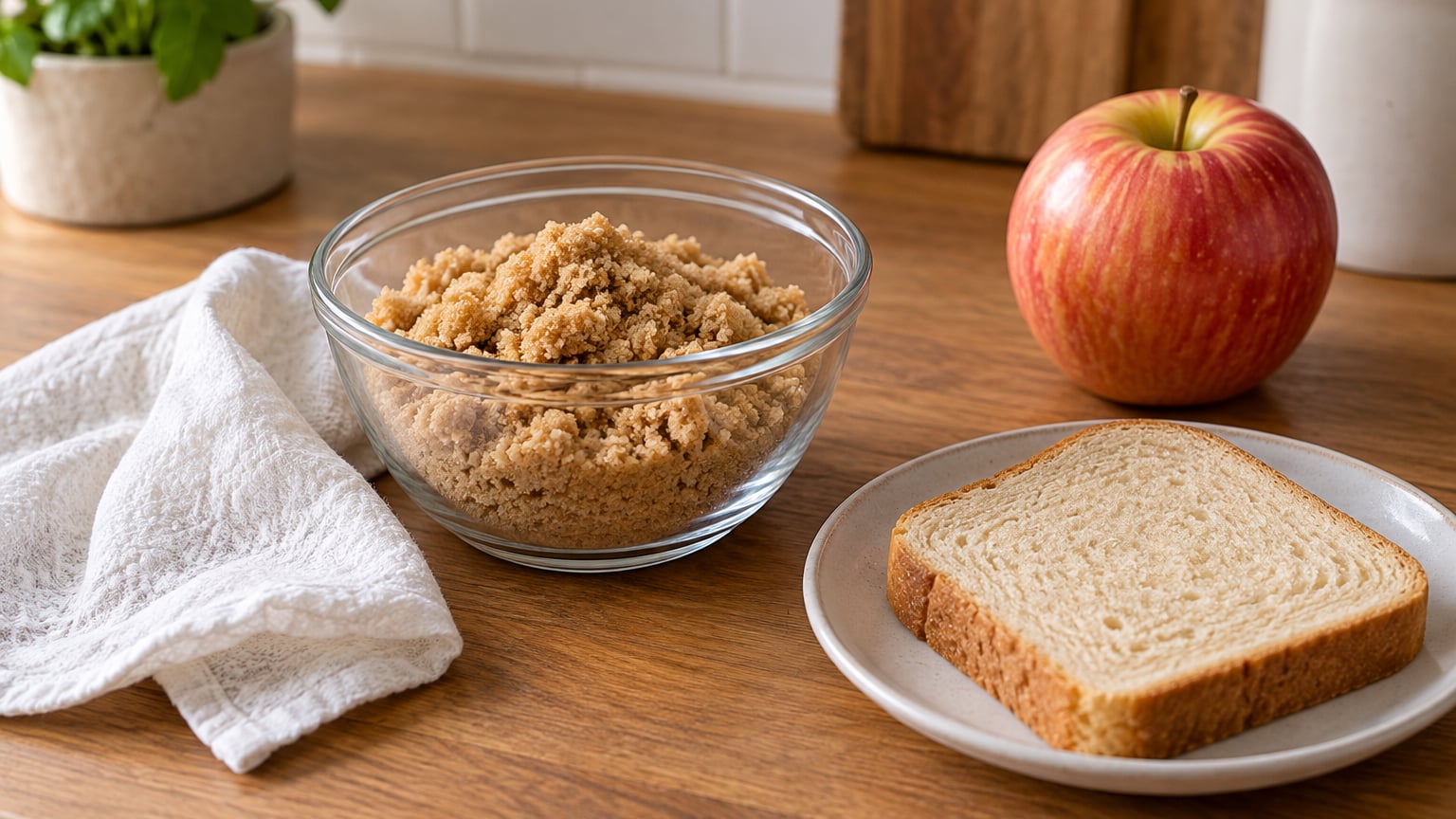
The bread trick is the classic slow fix, and it is ideal when you can plan ahead by a few hours or overnight. The bread slowly releases moisture into the sealed container, and the sugar absorbs it through contact.
Drop one slice of fresh bread into the bag or container of hardened brown sugar, seal it airtight, and leave it on the counter. Check after two hours. Most sugar softens within four to eight hours. Pull it out before the bread gets moldy, usually by the next morning. Discard the bread, sift the sugar if it is clumpy, and measure.
Plain white sandwich bread works fine. Heavier whole-grain loaves release moisture more slowly, so stick with regular sandwich bread for the fastest result.
3. Use a Fresh Apple Slice
Apple works on the same moisture-exchange idea as bread, but it kicks in a little faster and adds a faint fruity sweetness. It is a good pick when you have an apple on the counter and not a slice of bread.
Tuck two or three apple slices into the container, seal it, and wait one to two hours. Check by pressing the sugar with the back of a spoon. The apple flavor is mild, but if you are baking something neutral like snickerdoodles or spice cake, you will not notice it at all. For delicate bakes like shortbread or vanilla sugar cookies, swap to bread so the apple note does not change the flavor.
Remove the apple slices once the sugar is soft, and toss them before they start to brown or mold.
4. Oven at Low Heat
The oven method is great when you need to soften a whole bag at once. Heat warms the sugar through, and the trapped moisture inside each clump relaxes enough to break it apart easily.
Preheat your oven to 250°F (about 120°C). Spread the hardened sugar in a single layer on an oven-safe baking sheet or shallow dish. Warm it for about five minutes, then turn off the heat and leave the pan inside for another few minutes. Use a fork to break up clumps while the sugar is still warm. The sugar will be soft and usable the moment it comes out, and it stays workable for a while as it slowly cools.
Do not leave it longer than five minutes or go above 250°F. Higher heat can caramelize the edges and change the flavor, and the sugar will harden again into a single sheet as it cools.
5. Food Processor or Grater
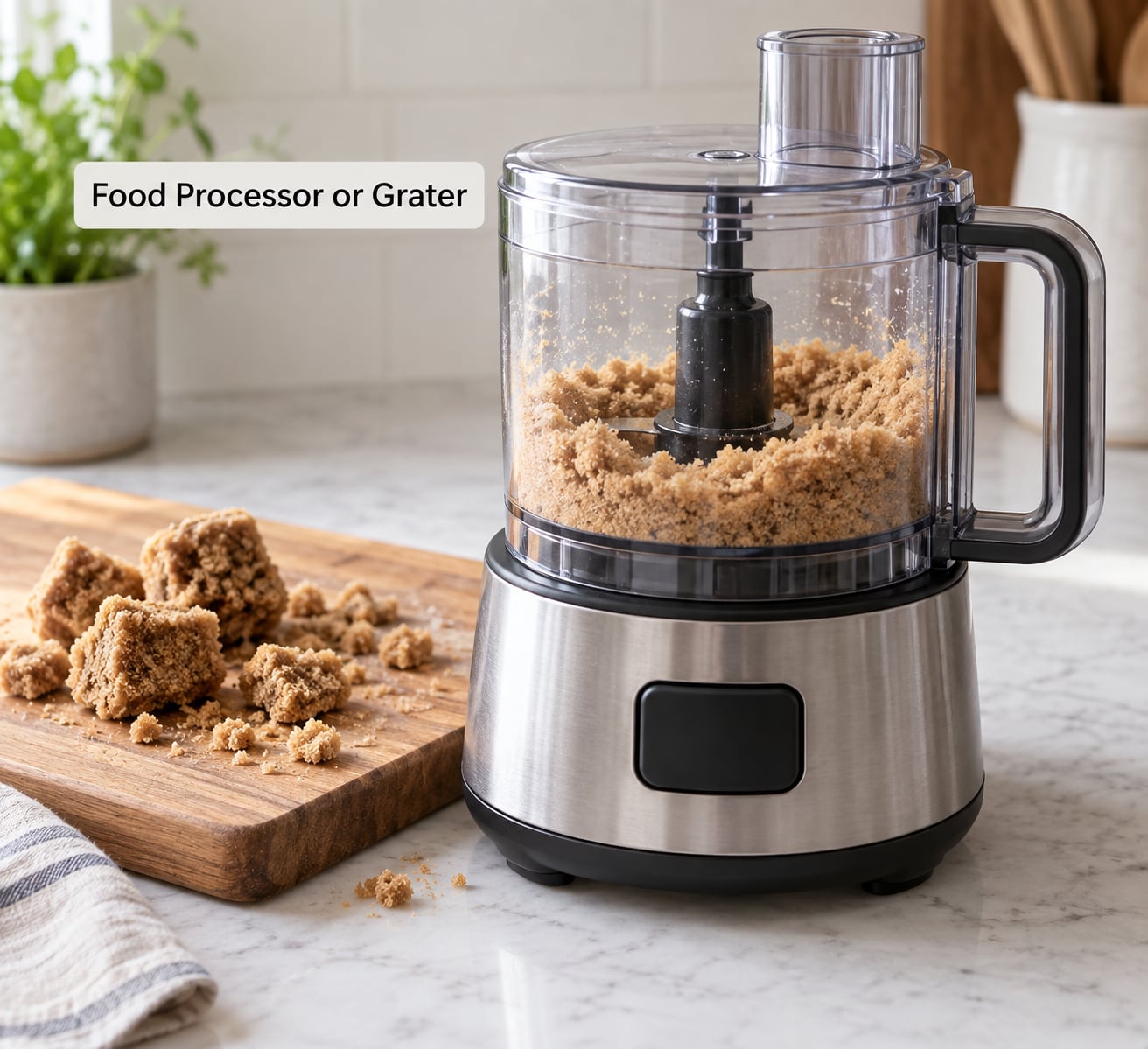
When the sugar is genuinely rock-hard and every other method feels like it will take too long, mechanical force is your friend. A food processor or blender breaks the sugar into fine granules in seconds, and the small particle size absorbs moisture from the air quickly enough to behave like soft brown sugar in your recipe.
Break the block into rough chunks that fit the feed tube. Pulse the processor in short bursts until the sugar looks like coarse sand, about 10 to 20 seconds. If you do not have a processor, grate the hardened block with a hand cheese grater. It takes more elbow grease, but the result is the same fine, soft sugar.
Use the sugar right away in your recipe, since mechanically broken sugar loses moisture fast once exposed to air.
6. Terracotta Brown Sugar Keeper
A sugar keeper is the long-term fix. These are small terra cotta discs or tiles sold with airtight containers. Soak the disc in clean water for about 15 minutes, pat it dry, and drop it into the sugar container. The soaked clay slowly releases moisture and keeps the sugar soft for weeks or months.
This is not a quick rescue for rock-hard sugar. It is the step that prevents the problem from coming back the next time you open the bag. Once your sugar is soft again (using one of the methods above), transfer it to an airtight container with a soaked disc and store it somewhere cool and dry.
Common Mistakes and How to Fix Them
A few simple errors ruin an otherwise perfect plan. Watch for them, and your sugar will behave the way the cookbook promised.
Melting the sugar in the microwave. Too long on high power turns the crystals sticky and partially liquid, and the sugar will re-harden into a single glassy slab as it cools. Fix it by going in short 10 to 20-second bursts and checking between each one. If you do end up with a melted patch, scrape it into a fresh bowl, fluff it with a fork, and use it quickly.
Adding too much liquid. A few drops of water help, but a splash will dissolve the sugar into syrup. Use a damp paper towel rather than pouring water, and never add more than a teaspoon for a cup of hardened sugar if you are trying the direct-water method.
Skipping the sift. Even soft brown sugar has small lumps that hide in the measuring cup and throw off your measurements. Push the softened sugar through a fine-mesh sieve or break it up with your fingers before measuring, especially for cookies where the ratio matters.
Putting the sugar back in the original bag. A torn-open paper or plastic bag is never airtight. The sugar will harden again within days. Transfer softened sugar to a glass jar with a rubber gasket or a heavy-duty plastic container with a snap lid the moment it is soft.
Walking away during the oven method. Sugar at 250°F can go from soft to scorched in under a minute once it starts to warm through. Set a timer, stay nearby, and pull the pan as soon as the clumps feel easy to break.
How to Keep Brown Sugar Soft Longer
The fastest way to deal with hard brown sugar is to stop it from hardening in the first place. Brown sugar hardens because the molasses coating each granule loses moisture to the air. Cut off that airflow and the sugar stays soft.
Store brown sugar in an airtight container the moment you open the bag. A glass jar with a clamp lid, a heavy plastic container with a snap seal, or a sturdy zip-top bag with the air pressed out all work. Avoid the original paper bag once it is open. The single biggest reason brown sugar goes brick-hard is air exposure, so the tighter the seal the better.
Drop in a moisture source if you live somewhere dry or do not bake often. A terra cotta sugar keeper disc is the cleanest option. A marshmallow cut in half, a slice of bread, or a damp paper towel folded into a small square all work in a pinch, though check them every few days and replace them before they get moldy.
Light brown sugar and dark brown sugar harden at slightly different rates. Dark brown sugar has more molasses, holds more moisture, and stays soft a touch longer. Both need airtight storage, but dark brown is more forgiving if you forget to seal the bag for a day.
Keep the container in a cool, dry pantry rather than next to the oven or over the dishwasher. Heat and steam both pull moisture out of the sugar faster.
Frequently Asked Questions
How long does it take to soften hardened brown sugar?
The microwave method softens brown sugar in 40 to 60 seconds total, using 20-second bursts. The bread or apple method in an airtight container takes two to eight hours, usually overnight for very hard sugar. The oven method at 250°F works in about five minutes.
Can you soften brown sugar in the microwave without melting it?
Yes. Cover the bowl with a damp paper towel and microwave on high in short 20-second bursts, checking and fluffing with a fork between each burst. The steam from the towel softens the sugar without melting the crystals. Stop as soon as the sugar presses easily between your fingers.
Why does brown sugar get hard in the first place?
Brown sugar hardens when the molasses coating each crystal dries out from humidity loss. Air exposure is the main cause, but warm storage near the oven or dishwasher speeds it up. Once sugar has gone hard once, it seems to happen faster the next time, which is why airtight storage matters right from the start.
Is it safe to use brown sugar that has hardened and been softened again?
Yes. Hardened brown sugar is not spoiled or unsafe, just dry. As long as there is no off smell, visible mold, or signs of insects, softening and using it is fine. Discard any sugar that smells stale, looks discolored, or has any moisture that smells fermented.
What is the best way to keep brown sugar soft after opening the bag?
Move the sugar into a truly airtight glass or heavy plastic jar as soon as you open it, and store it in a cool pantry. Adding a soaked terra cotta sugar saver, a fresh marshmallow half, or a small piece of bread keeps moisture in. Check moisture sources every few days and replace them before they mold.
Conclusion
If you are mid-recipe and the sugar is hard, go straight to the microwave method with a damp paper towel. Two or three short bursts are usually enough to bring even stubborn brown sugar back to life. For next time, transfer whatever is left of the bag into a glass jar with a soaked terra cotta disc, and the problem quietly disappears for months.