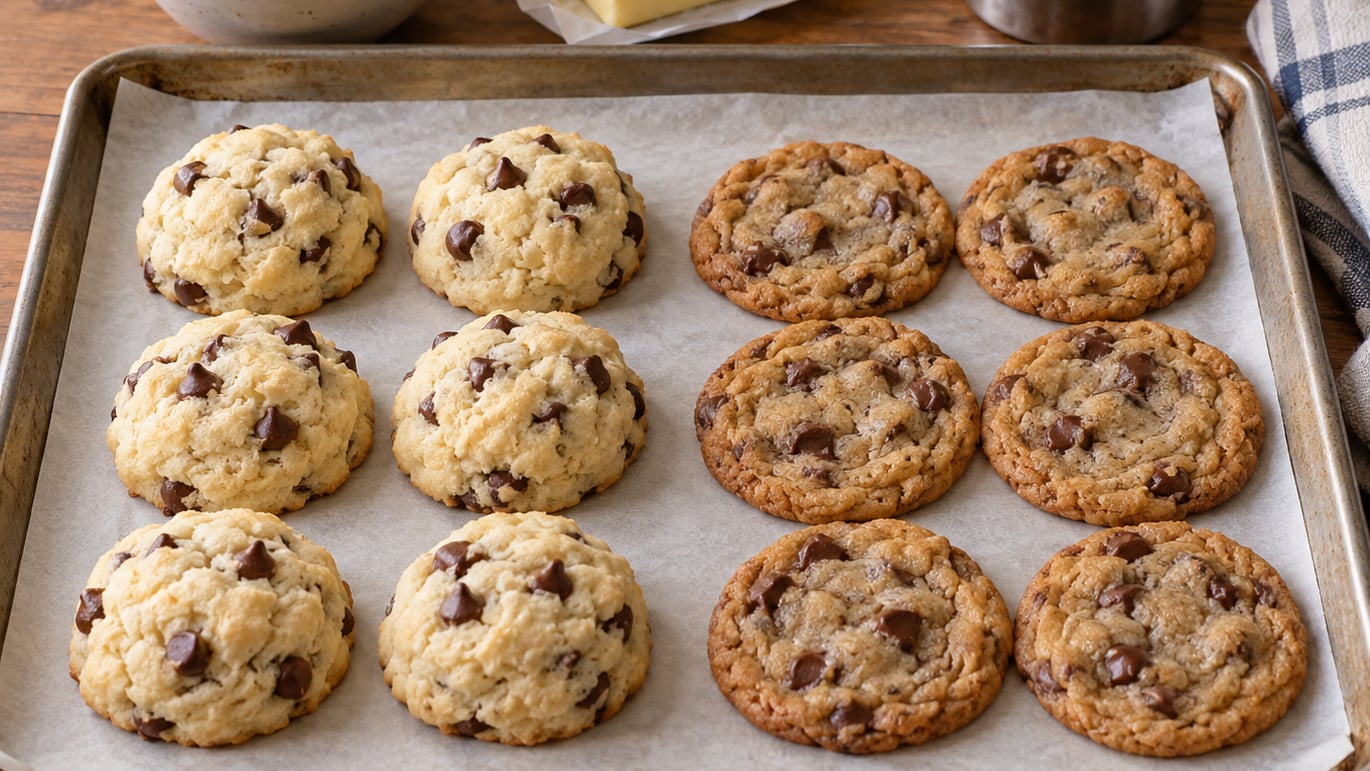
If your cookies keep coming out puffy, soft, and a little bit too much like cake, you are not alone. The most common reason is that the dough picked up too much flour somewhere along the way, and that single extra tablespoon is usually enough to push the texture from chewy to cakey. Other usual suspects include using too much baking powder, over-creaming the butter, or leaning too heavily on egg whites instead of yolks.
The good news is that the fix is almost always in the ingredients or the mixing bowl, not the oven. Below is what actually goes wrong, why it pushes cookies toward a muffin-like crumb, and the simple swaps that get you back to soft and chewy on your next batch.
Table of Contents
- Why Are My Cookies Cakey Instead of Chewy?
- The Short Answer: What Makes a Cookie Chewy vs. Cakey
- The Baking Science Behind a Cakey Cookie
- Common Reasons Your Cookies Turn Out Cakey
- Ingredient Fixes for Chewier Cookies
- Technique Fixes: Mixing, Shaping and Baking
- Oven and Pan Mistakes That Make Cookies Cakey
- Cookie Texture Cheat Sheet
- Frequently Asked Questions
- How do I make my cookies less cakey and more chewy?
- Does using bread flour instead of all-purpose make cookies less cakey?
- Why do my cookies come out puffy and soft like cake?
- Is brown sugar better than white sugar for chewy cookies?
- Does melting the butter make cookies chewier?
- Can I fix cakey cookies after they are already baked?
- The Quickest Fix to Try in Your Next Batch
Why Are My Cookies Cakey Instead of Chewy?
Cookies turn out cakey when the dough develops a structure closer to a muffin or a cupcake than to a classic chewy cookie. That happens when flour, leavening, eggs, and air all skew a little too high for the amount of fat and sugar. Flour builds gluten, leavening adds lift, egg whites dry and firm, and creamed butter traps air. Pile too many of those on top of each other and you get a tender, springy crumb that bounces back when you press it instead of sinking in.
The four levers that move cookies toward cakey are too much flour, too much leavening (baking powder or soda), too much egg or egg white, and not enough fat or brown sugar. Pulling back on even one of those usually makes a visible difference by the next tray.
The Short Answer: What Makes a Cookie Chewy vs. Cakey
Chewy cookies spread a little, stay dense and soft in the middle, and bend before they break. Cakey cookies rise higher, feel springy under your finger, and have a finer, more even crumb. The single biggest difference is how much air and how much flour the dough holds. Chewier doughs are lower in flour, lower in leavening, and higher in fat and brown sugar; cakey doughs are the opposite.
If you only change one thing, swap part of the white sugar for brown sugar and drop the baking powder by about half. That move alone nudges most recipes firmly into chewy territory.
The Baking Science Behind a Cakey Cookie
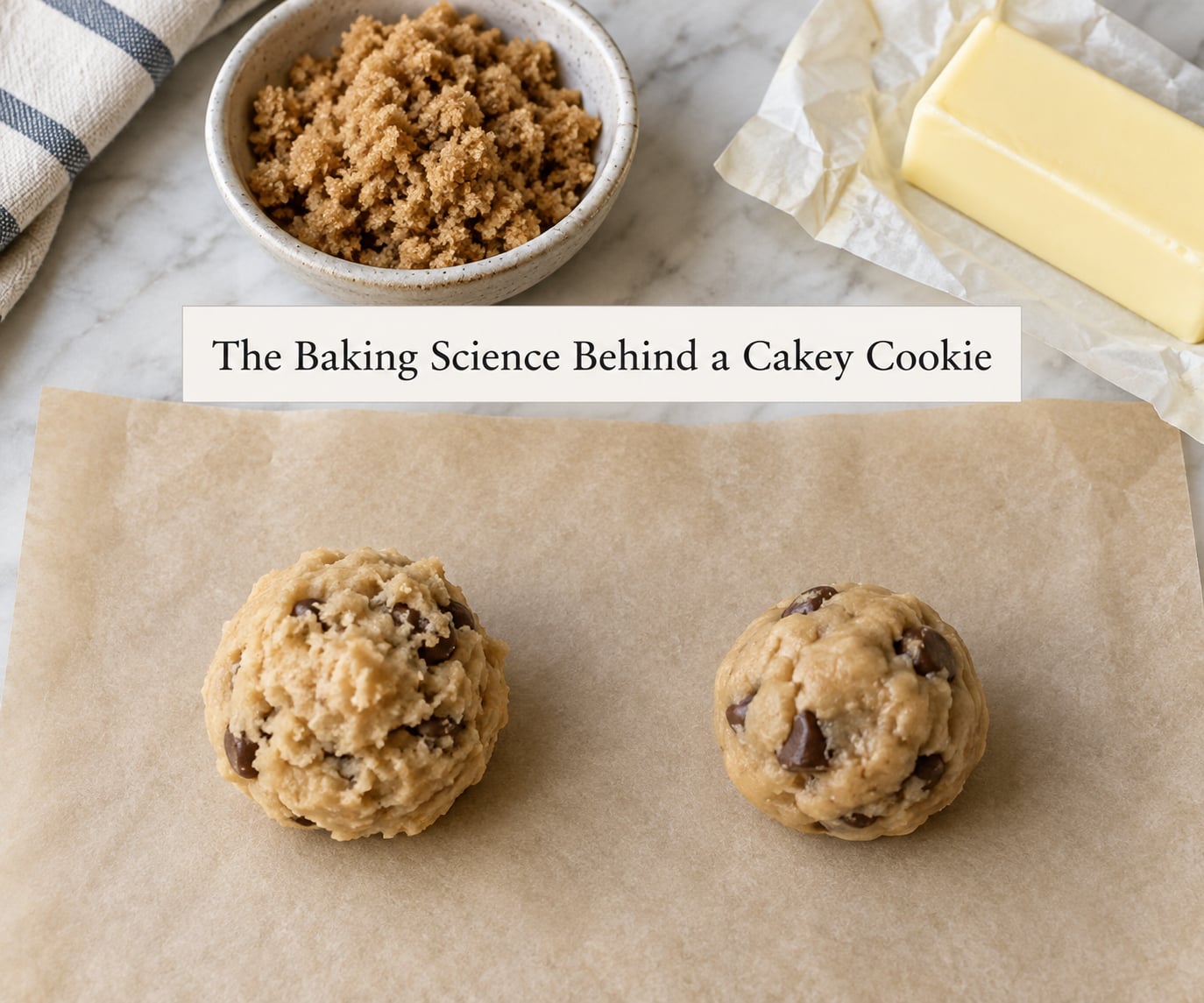
Every ingredient in a cookie dough plays a structural role, and changing the balance changes the texture. Understanding what each one does is the fastest way to troubleshoot, because then you can predict the result before the tray even goes in.
Flour is the main source of gluten, the protein network that gives baked goods their structure. More flour means more gluten, more structure, and a sturdier, cakier cookie. Less flour means a denser, softer, chewier cookie that spreads more on the sheet.
Leavening (baking soda and baking powder) is what makes cookies puff up. Baking soda reacts once with an acid and then is spent. Baking powder is double-acting and keeps lifting in the oven, which is great for cakes and a bit too much for a chewy cookie. A recipe that calls for both often uses the baking soda for browning and flavor, while the baking powder is the part pushing things toward cakey.
Sugar does more than sweeten. White sugar encourages spread and crisp edges. Brown sugar contains molasses, which adds moisture and acidity, slows gluten development, and gives that bendy, fudgy chew. A 100% white-sugar dough tends to be thinner and crisper; a brown-sugar-heavy dough stays softer and chewier in the middle.
Fat from butter or shortening coats flour proteins and slows gluten formation. More fat means a more tender, denser cookie. Less fat means the flour can soak up more liquid and form a tighter, cakier crumb. That is one reason cookies made with only a couple of tablespoons of butter can feel surprisingly cakey.
Eggs add liquid, fat, and protein. Egg yolks are mostly fat and emulsifiers, which keep cookies rich and soft. Egg whites are mostly water and protein, which firm up and dry out as the cookie bakes. A recipe that uses two whole eggs plus a third white, or that calls for three whites, will trend cakier than a recipe that uses two yolks plus one whole egg.
Common Reasons Your Cookies Turn Out Cakey
Most home bakers hit the same handful of problems in roughly the same order. Here is the ranking, from the one I see most often to the one that shows up least.
1. Too much flour. This is the number one cause. Dipping the measuring cup into the bag, packing the cup, or sifting after measuring all add a hidden 20 to 30% more flour than the recipe intended. Over time, that extra flour is the difference between chewy and cakey.
2. Too much baking powder or soda. If the recipe was written for one leavener and you doubled it, or if you used baking powder where the recipe wanted baking soda, the cookies will puff instead of spread.
3. Too much egg or too many whites. Extra egg adds liquid and structure at the same time, and the whites dry out as they bake. A cookie that tastes fine but feels cakier than expected is often a one-egg-too-many problem.
4. Not enough butter, or the wrong fat. Cutting butter in half, swapping in applesauce, or using a stick of margarine with a lot of water can dry out the dough and leave the flour nothing to coat.
5. All white sugar. A dough with only granulated sugar lacks the moisture and acidity of brown sugar, so the cookies bake up drier and puffier instead of soft and bendy.
6. Over-creaming the butter and sugar. Beating for five minutes instead of two whips a lot of air into the dough. That air expands in the oven, the cookies rise, and the crumb looks closer to a cupcake than a cookie.
Ingredient Fixes for Chewier Cookies
Most of the fixes are simple swaps you can make on the next batch without changing the recipe’s spirit. Work from the top of the list down, testing one change at a time so you know what actually moved the needle.
Measure flour by weight or spoon and level. If your recipe gives cups, use 125 grams per cup of all-purpose flour as a sanity check, or spoon the flour into the cup and level it off with a flat edge. Never pack the cup or shake it to settle.
Swap part of the white sugar for brown. Try a 50/50 mix, or go to 75% brown and 25% white for an even chewier result. Light or dark brown both work; dark brown adds a bit more molasses flavor.
Cut the leavening in half. If the recipe calls for 1 teaspoon of baking powder, try 1/2 teaspoon. If it calls for both baking soda and baking powder, drop the powder by half and keep the soda.
Use one whole egg plus one yolk instead of two whole eggs. The extra yolk adds fat and richness without adding more of the drying whites. If the recipe already calls for two yolks, leave it alone.
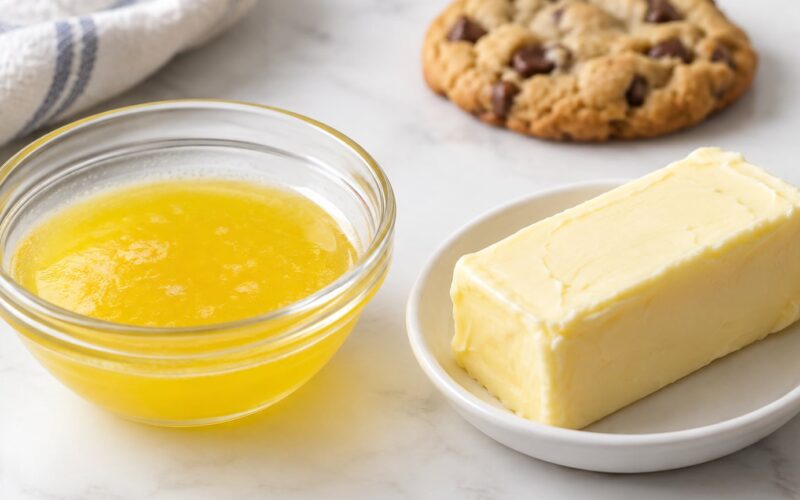
Melt the butter, or use slightly more butter. Melted butter coats flour more evenly and gives a denser, chewier cookie. So does adding an extra tablespoon of butter to the recipe.
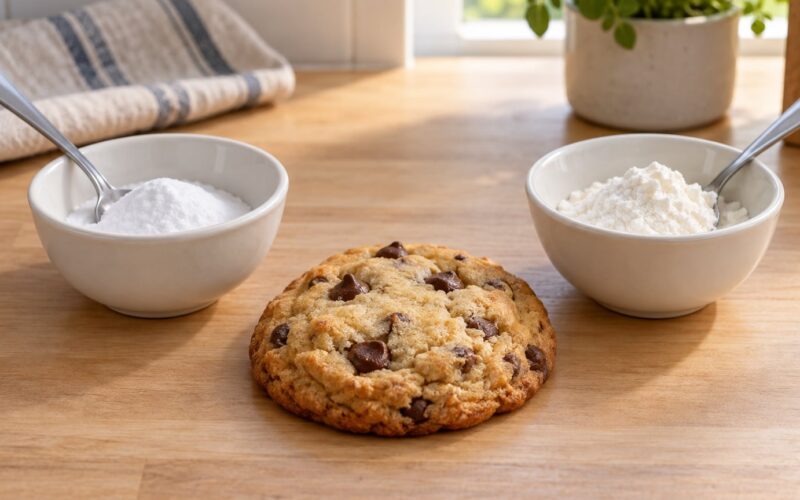
Add a teaspoon of cornstarch. A small amount of cornstarch softens gluten and keeps cookies tender. It will not make them taste chalky at that dose.
Technique Fixes: Mixing, Shaping and Baking
Even with the right ingredients, technique can push cookies in the wrong direction. A few small habits at the bowl and the oven are usually the difference between a batch that spreads and a batch that puffs.
Mix the dry ingredients just until combined. Once the flour goes in, stir only until you no longer see streaks. Over-mixing after this point develops gluten, and more gluten means a cakier, tougher cookie.
Cream the butter and sugar for 1 to 2 minutes, not 5. You want the mixture light and just barely fluffy, not pale and pillowy. Long creaming times pack in too much air.
Chill the dough for 30 minutes to an hour. Cold dough spreads more slowly, which gives the edges time to set before the center rises. Chilling also lets the flour fully hydrate, so the cookies bake up with a more even, chewy texture.
Use a cookie scoop and leave room to spread. A level scoop (about 2 tablespoons) gives consistent size. Space the scoops at least 2 inches apart on the sheet so cookies do not bake into one cakey slab.
Bake on the middle rack and pull early. Pull the tray when the edges look set but the centers still look slightly underdone. They will finish setting on the hot sheet. Cookies that bake all the way to “done” in the oven usually bake past chewy into cakey or dry.
Oven and Pan Mistakes That Make Cookies Cakey
The oven and the pan are easy to overlook, but they quietly change the texture in a big way. A small swing in real oven temperature can be the difference between chewy middles and dry, cakey middles.
Dark or nonstick pans run hot. Dark metal absorbs more heat than light aluminum, so the bottoms and edges set faster and the inside can dry out before it has time to spread. If you bake on dark pans, drop the oven temperature by 25 degrees and check a minute or two early.
Convection ovens bake faster and drier. The fan moves hot air around the tray, which sets the surface quickly. If you use convection, drop the temperature by about 25 degrees or shorten the bake time by a couple of minutes. The dough has more time to spread before it sets, and you get a chewier result.
The oven may not be the temperature it says. Oven dials drift, and a 350 degree dial can actually run 25 degrees hot or cold. An inexpensive oven thermometer takes the guesswork out. A too-hot oven sets the outside too fast and leaves a dry, cakey center; a too-cool oven can under-bake and leave the cookies pale and puffy.
Rack position matters. The top rack browns the tops faster; the bottom rack browns the bottoms. For most cookies, the middle rack gives the most even bake and the most even texture.
Always bake on parchment or a silicone mat. Bare metal or greased sheets can make cookies spread too fast, which sometimes leaves them thin and dry in the middle. Parchment slows that spread just enough to keep the centers soft.
Cookie Texture Cheat Sheet
The table below pairs the most common ingredient ratios with the texture each one tends to produce. Use it as a starting point, then adjust by a tablespoon at a time on your next batch.
| Factor | Cakey-leaning | Chewy-leaning |
|---|---|---|
| Flour amount | More than the recipe calls for, packed cup | Spoon and level, or weigh in grams |
| White vs brown sugar | 100% white sugar | 50/50 to 75% brown sugar |
| Leavening | Full amount of baking powder, no soda | Half the powder, or soda plus a pinch of powder |
| Eggs | Two whole eggs, or extra white | One whole egg plus one yolk |
| Butter state | Creamed until pale and fluffy | Slightly soft, or melted and cooled |
| Mixing after flour | Beat until smooth | Stir just until no streaks remain |
| Bake time | Bake until the center looks set | Pull when the center still looks slightly underdone |
Frequently Asked Questions
How do I make my cookies less cakey and more chewy?
Start by spooning and leveling the flour (or weighing it) so you are not adding hidden extra. Then swap roughly half of the white sugar for brown sugar, and cut any baking powder in half. Use one whole egg plus one yolk instead of two whole eggs, and pull the tray when the centers still look slightly underdone. Those four changes cover most cakey batches.
Does using bread flour instead of all-purpose make cookies less cakey?
No, bread flour usually makes cookies cakier, not chewier. Its higher protein forms more gluten, so the dough holds its shape and rises more in the oven. For chewier cookies, stick with all-purpose flour, or try a 50/50 mix of all-purpose and pastry flour for a softer result.
Why do my cookies come out puffy and soft like cake?
Puffy, soft cookies usually mean the dough is trapping too much air and has too much leavening. Over-creaming the butter and sugar whips in extra air, and too much baking powder expands that air in the oven. Combined with a little too much flour, you get a cookie that rises instead of spreads.
Is brown sugar better than white sugar for chewy cookies?
Yes, brown sugar is one of the easiest ways to get a chewier cookie. The molasses in brown sugar adds moisture and a little acid, which slows gluten formation and keeps the centers soft. A dough that is heavy on brown sugar spreads less, stays fudgy in the middle, and bends before it breaks.
Does melting the butter make cookies chewier?
Usually yes. Melted butter coats the flour more evenly than softened butter, which limits gluten development and gives a denser, chewier cookie. Cool the melted butter for a few minutes so it is warm, not hot, before mixing it into the dough.
Can I fix cakey cookies after they are already baked?
You cannot un-bake a cakey cookie, but you can soften it. Store the cookies in an airtight container with a slice of bread overnight; the bread gives up its moisture and the cookies absorb it. For a quick fix, microwave one cookie for 8 to 10 seconds so the center feels soft and warm again.
The Quickest Fix to Try in Your Next Batch
If you only try one change on the next batch, make it this: use more brown sugar than white, and pull back on the flour by about a tablespoon. That single swap addresses the two most common reasons cookies turn out cakey in the first place, and it costs you nothing but a few grams on the scale. From there, adjust the leavening, the egg balance, and the bake time one at a time until the cookies land exactly where you want them: soft, bendy, and chewy all the way through.