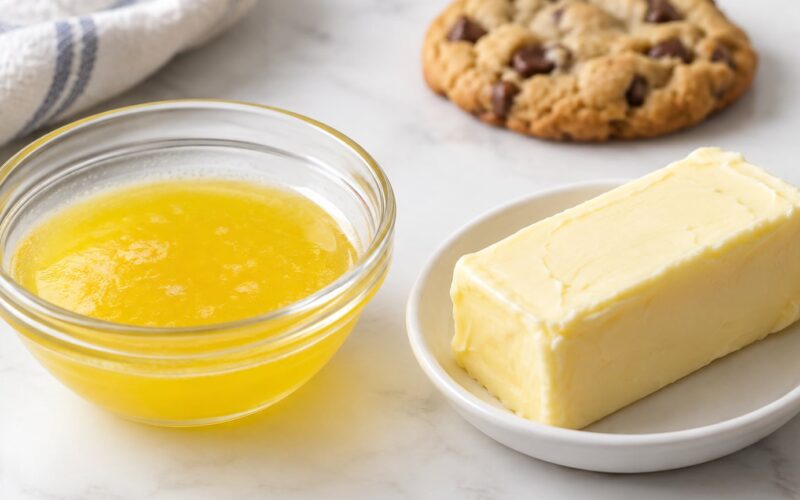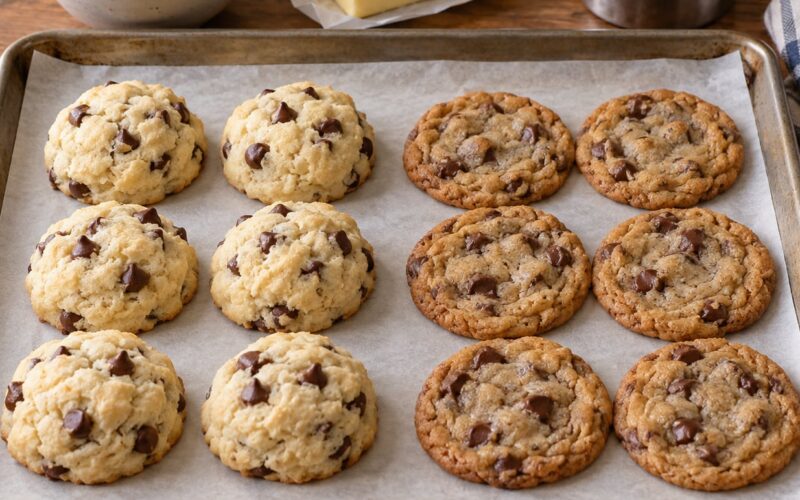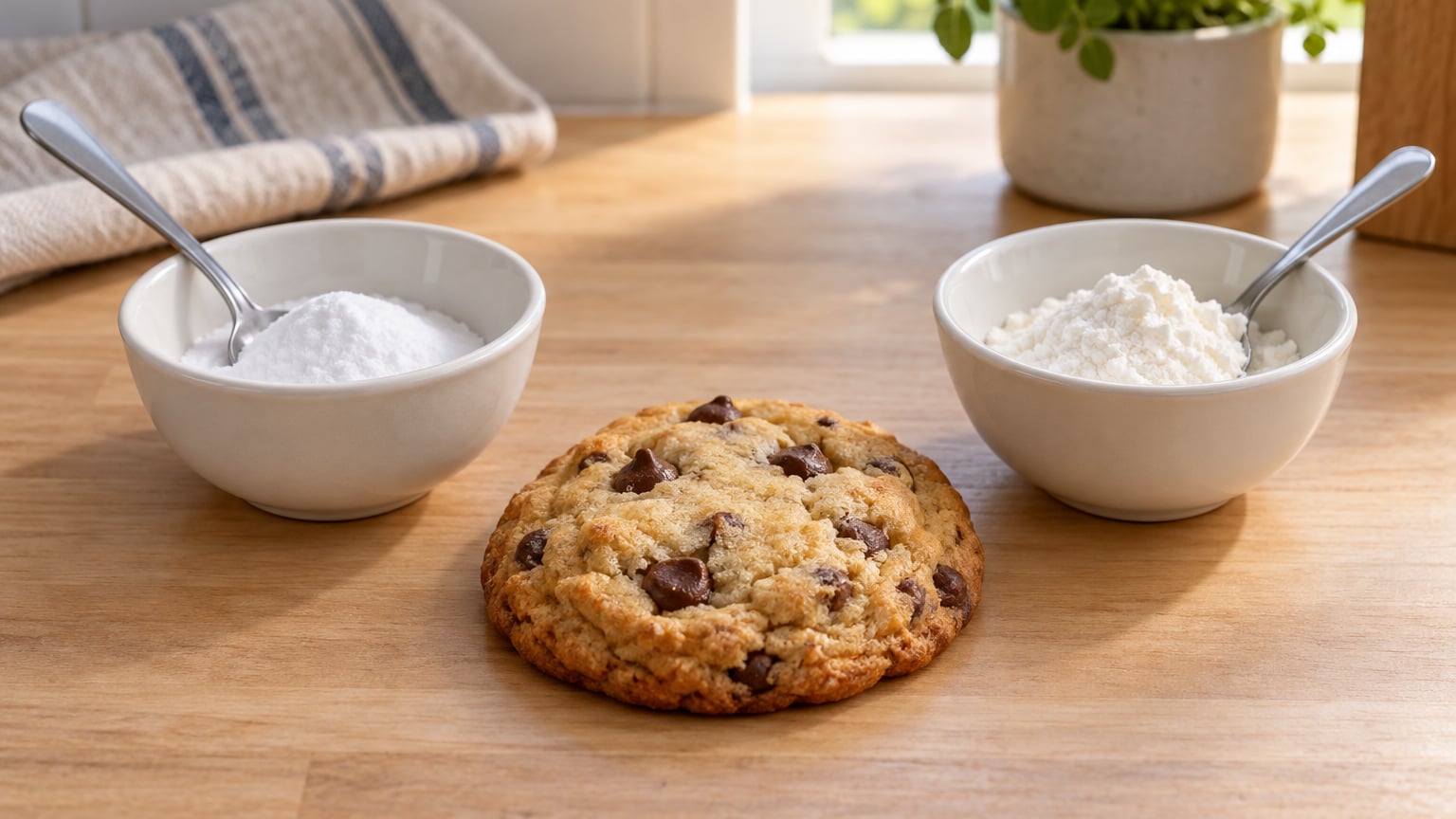
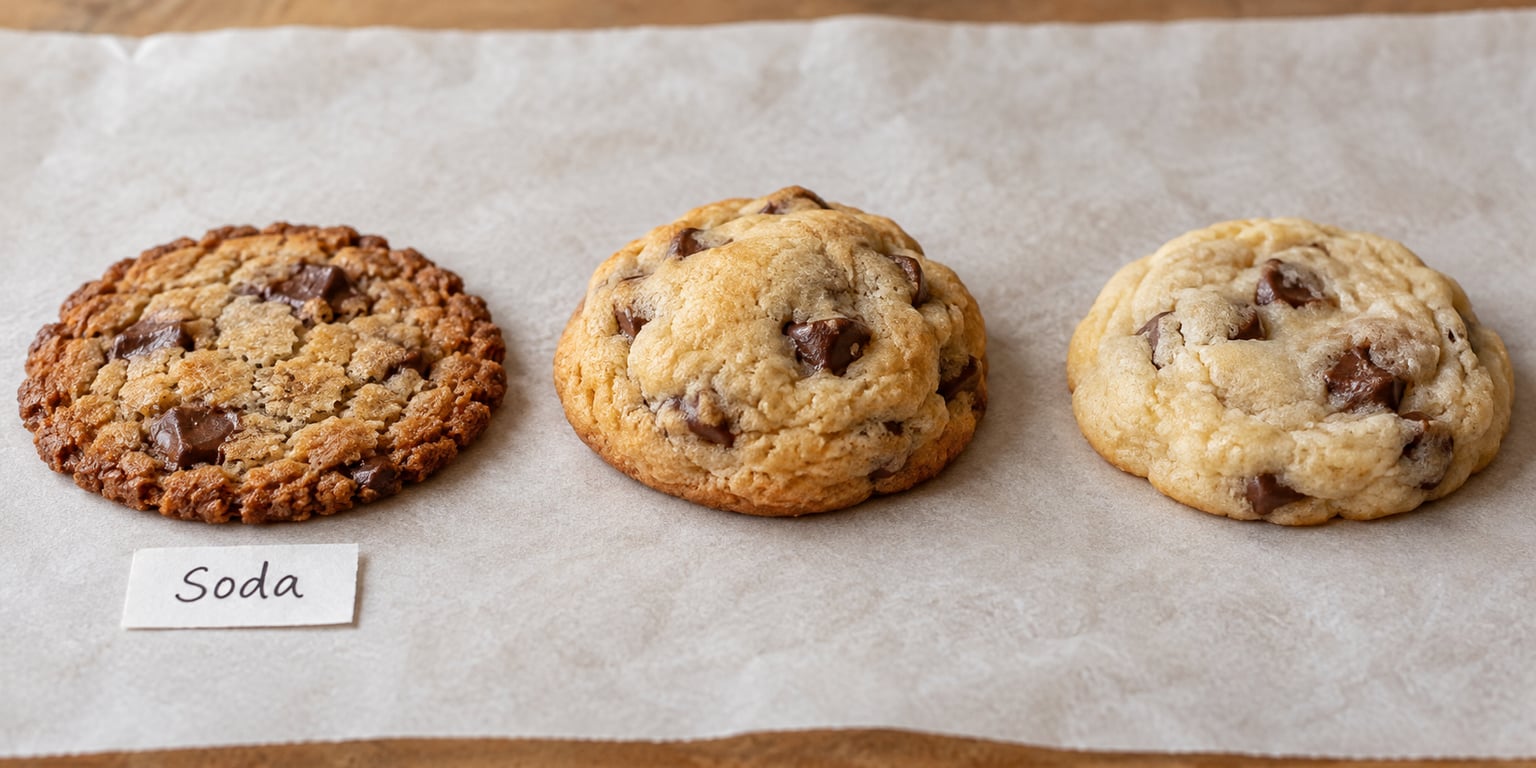
Baking soda makes cookies spread wide, turn golden brown, and develop crisp edges with a slight tangy balance. Baking powder makes cookies puff up taller, stay paler in color, and bake up soft and cakey in the middle. Pick baking soda when your dough already contains an acidic ingredient like brown sugar, molasses, or chocolate, and pick baking powder when it does not.
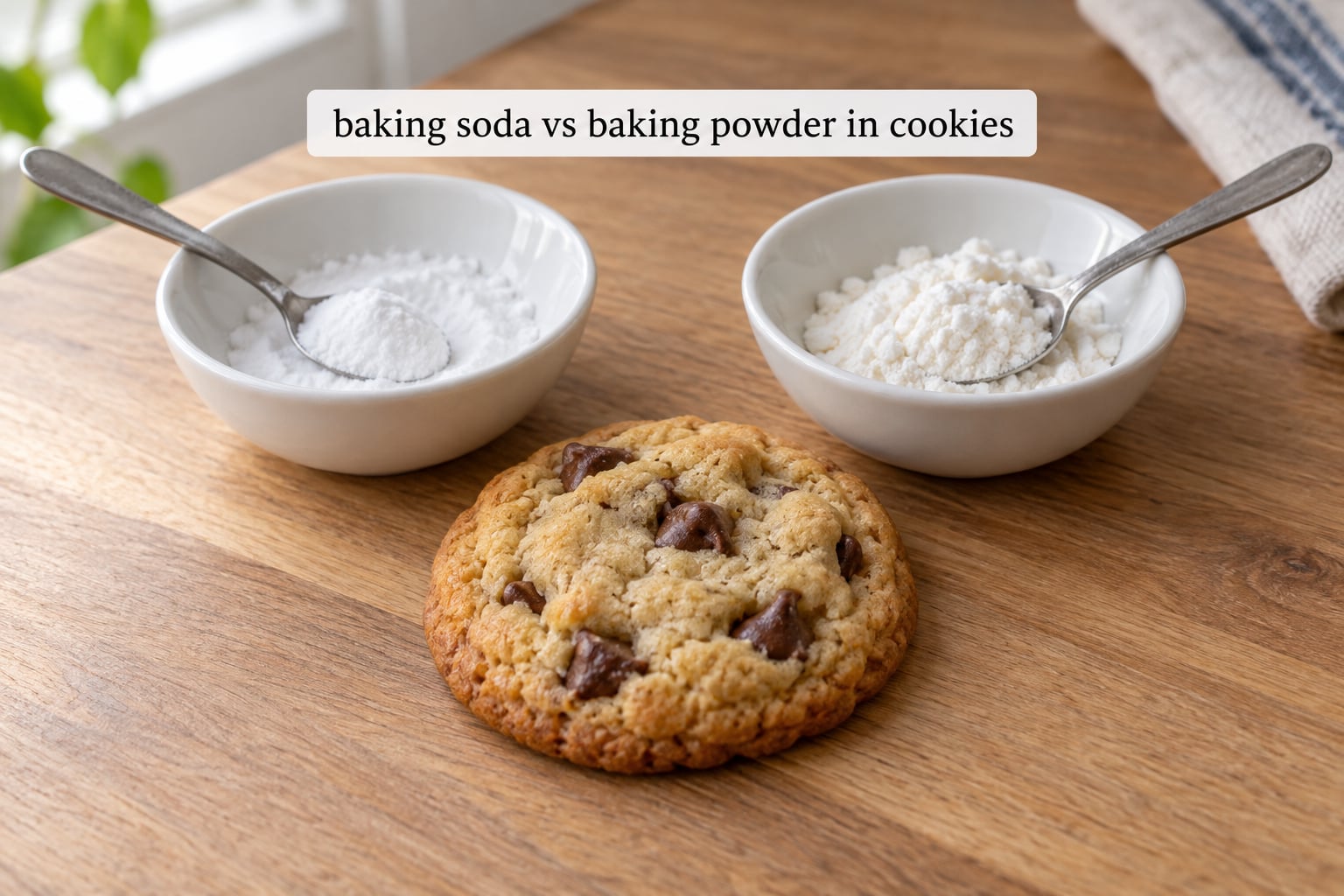
Table of Contents
- Baking Soda vs Baking Powder in Cookies: The Quick Answer
- Baking Soda vs Baking Powder in Cookies at a Glance
- How Baking Soda Works in Cookies
- How Baking Powder Works in Cookies
- How Each One Affects Spread, Lift, Browning and Flavor
- Can You Substitute One for the Other in Cookies?
- Which Should You Use for Common Cookie Types?
- How to Tell What Your Recipe Needs
- Frequently Asked Questions
- What happens if I use baking powder instead of baking soda in cookies?
- What happens if I use baking soda instead of baking powder in cookies?
- How much baking powder equals 1 teaspoon of baking soda?
- Do chocolate chip cookies need baking soda or baking powder?
- Why do my cookies taste bitter or soapy after adding baking soda?
- The Bottom Line
Baking Soda vs Baking Powder in Cookies: The Quick Answer
Baking soda (sodium bicarbonate) is a single alkaline ingredient that reacts only when it meets an acid. Once it does, it gives off carbon dioxide gas in two bursts: one as soon as the wet dough comes together, and another when the heat of the oven kicks in. That double reaction is exactly what spreads a cookie flat across the sheet pan, delays the moment its proteins set, and lets the sugars brown deeply. A cookie made with baking soda lands on the thin, chewy, crinkly side of the spectrum and carries a faint salty tang behind the vanilla.
Baking powder is baking soda plus a dry acid (usually cream of tartar) and a buffer like cornstarch. Because the acid is already mixed in, baking powder only needs moisture and heat to release its gas. Most baking powders sold today are double-acting, which means a small amount reacts as soon as wet ingredients hit, and the rest reacts at oven temperature. The result is a cookie that rises taller before the structure sets, holds that height, and ends up softer and more cakier than its baking-soda cousin.
The quick rule: if the dough has brown sugar, honey, molasses, buttermilk, yogurt, or cocoa, baking soda is almost always the right pick. If it has none of those acids, baking powder is the safer call.
Baking Soda vs Baking Powder in Cookies at a Glance
| Criterion | Baking Soda | Baking Powder |
|---|---|---|
| What it is | Pure sodium bicarbonate | Baking soda plus a dry acid and cornstarch |
| Needs acid to react | Yes (brown sugar, molasses, chocolate, etc.) | No, acid is built in |
| Effect on spread | More spread, thinner cookies | Less spread, cookies hold their shape |
| Effect on lift | Lower profile, flatter top | Taller, puffier rise |
| Color and browning | Deeper golden brown | Paler, more uniform color |
| Flavor | Slight tangy, salty edge | Neutral, mild |
| Texture | Chewy center, crisp edges | Soft, cakey, tender |
| Best for | Chocolate chip, gingerbread, oatmeal, snickerdoodles | Sugar cookies, shortbread, cut-outs, biscotti |
How Baking Soda Works in Cookies
Baking soda is sodium bicarbonate, a base. On the shelf, it sits quietly. The moment it meets an acidic ingredient plus a liquid, it begins reacting. That first reaction releases carbon dioxide gas right there in the mixing bowl, which is why dough made with baking soda starts to look slightly puffy for a few minutes before you scoop it.
The second reaction happens in the oven. As the dough heats up, any remaining sodium bicarbonate finishes its job, and the gas pushes the cookie outward instead of upward. At the same time, baking soda raises the pH of the dough. A higher pH means the gluten and egg proteins take longer to firm up, so the cookie spreads further before it sets. That same higher pH speeds up the Maillard reaction between sugars and proteins, which is the chemistry behind the deep brown color and the toasted, almost butterscotch flavor you get in a good chocolate chip cookie.
That is why classic chewy cookies – chocolate chip, oatmeal raisin, gingerbread, molasses, snickerdoodles – all list baking soda in the ingredients. The cookie needs the tangy balance, the spread, the crackled top, and the dark caramelized edges that only soda delivers.
How Baking Powder Works in Cookies
Baking powder takes care of two problems at once by packaging its own acid alongside it. A standard double-acting baking powder contains baking soda, one or two dry acids (cream of tartar is the classic one, with sodium aluminum sulfate or monocalcium phosphate in many modern versions), and a bit of cornstarch to keep the mixture from clumping or reacting on the shelf.
The double-acting label is the key detail. About a third of the gas escapes as soon as the baking powder gets wet, and the rest escapes when the oven hits around 140°F. Because the acid is already in the dough, no other acidic ingredient is required. The bubbles lift the cookie upward rather than pushing it sideways, so it sets tall instead of wide.
Cookies made with baking powder come out paler, because there is no extra alkalinity driving the Maillard reaction. They feel softer in the middle, and they hold their shape better when cut or stamped. That is exactly what you want for sugar cookies rolled and cut into shapes, shortbread, biscotti, snickerdoodle twists, and any dough where a clean edge and a soft bite matter more than spread and crackle.
How Each One Affects Spread, Lift, Browning and Flavor
Spread: baking soda spreads more. The proteins in the dough stay relaxed longer, so gravity wins and the cookie flattens. Baking powder sets faster and holds its scoop shape, so the cookie bakes narrower than it was portioned only slightly.
Lift and thickness: baking powder puffs up more. Most of the lift comes in the first ten minutes in the oven, and the cookie settles gently as it cools. Baking soda cookies rise barely at all before they fall outward.
Browning: baking soda browns more. The raised pH accelerates the Maillard reaction, so the bottom and edges of a baking-soda cookie reach a deeper golden color at the same oven temperature. Baking powder cookies tend to stay pale tan unless the recipe adds another source of color, like browned butter or a generous amount of brown sugar.
Flavor: baking soda contributes a faint tang and a salty edge that balances very sweet doughs. Too much of it tips into bitter or soapy territory, which is the most common complaint about baking-soda cookies. Baking powder tastes neutral. If a recipe uses a lot of it, the cornstarch buffer can add a faintly chalky note.
Can You Substitute One for the Other in Cookies?
You can swap them in a pinch, but the rule is not one-for-one. The general guideline is to replace 1/4 teaspoon of baking soda with 1 teaspoon of baking powder, because baking powder is roughly one-quarter as strong as straight baking soda. Going the other way, you would swap 1 teaspoon of baking powder for about 1/4 teaspoon of baking soda, but only if the recipe already contains an acidic ingredient for that soda to meet.
When the swap goes wrong, the cookie gives its own clues:
- Too much baking soda leaves a bitter, soapy, or metallic taste. The cookies often look rough on top and spread more than the recipe intended.
- Too much baking powder causes a faintly metallic taste and an excess lift that collapses into a dense, cakey texture. The cookies also tend to spread more, despite the lift.
- Baking soda in a dough without enough acid leaves flat, pale cookies and a chalky aftertaste, since the soda has nothing to react with.
- Baking powder in an already acidic dough is usually safe but wasteful: the powder and the acid in the brown sugar or molasses both release gas, and the cookie often rises and then falls flat.
When you do swap, bake a single test cookie first. Portion one small dough ball onto a corner of the sheet pan, watch how it spreads, and taste it once it has cooled. A two-minute test beats a ruined tray of twelve cookies every time.
Which Should You Use for Common Cookie Types?
Baking soda is the right choice for chocolate chip cookies, oatmeal raisin, gingerbread, molasses cookies, snickerdoodles, and anything that calls for brown sugar as the main sweetener. These doughs are full of acids that soda needs, and they benefit from the spread, the crackled top, and the browned edges soda delivers.
Baking powder is the right choice for sugar cookies rolled and cut into shapes, shortbread, biscotti, vanilla slice-and-bakes, and most cakey holiday cookies where you want a clean edge and a soft, tender bite.
Using a small amount of both works when a recipe wants the spread and browning of soda plus the lift of powder. Many bakery-style chocolate chip cookies use a pinch of baking powder alongside the soda for a thicker center that still spreads and browns. As a starting point, replace one-quarter of the soda with three-quarters of its weight in baking powder, and adjust from there based on your test bake.
How to Tell What Your Recipe Needs
Read the ingredient list and look for acids before you worry about the leavening line. Brown sugar, honey, molasses, maple syrup, cocoa powder, buttermilk, yogurt, sour cream, cream of tartar, and lemon juice all count. If the dough contains one or more of them, baking soda is almost certainly the leavening that was written in for a reason.
If the dough is built on white granulated sugar, butter, eggs, vanilla, and flour with no acid in sight, baking powder is the more sensible pick. Recipes that call for very cold butter, lots of chilling time, or rolling and cutting also point toward baking powder, since you want the dough to hold its shape rather than slump on the sheet pan.
One more clue: if the recipe title says chewy, crinkly, crackled, or thin, expect baking soda. If the title says soft, pillowy, cakey, or thick, expect baking powder.
Frequently Asked Questions
What happens if I use baking powder instead of baking soda in cookies?
Cookies rise a bit taller and bake paler with a softer, cakier texture. Without enough acid in the dough, the swap often tastes faintly flat and can leave a metallic note from the cornstarch buffer in the powder.
What happens if I use baking soda instead of baking powder in cookies?
Cookies spread wider, brown more deeply, and develop that crackled top bakers love. If the dough has no acid for the soda to meet, you will get flat cookies with a bitter or soapy aftertaste.
How much baking powder equals 1 teaspoon of baking soda?
Use about 4 teaspoons of baking powder for every 1 teaspoon of baking soda, since it is roughly one-quarter as strong. Going the other way, 1/4 teaspoon of soda stands in for 1 teaspoon of powder if the dough has an acid already.
Do chocolate chip cookies need baking soda or baking powder?
Most classic chocolate chip cookie recipes rely on baking soda because brown sugar gives it the acid it requires. A small amount of baking powder added alongside the soda gives a taller center without losing the spread and browning.
Why do my cookies taste bitter or soapy after adding baking soda?
Too much soda for the amount of acid in the dough leaves unreacted sodium bicarbonate behind, and that tastes bitter or soapy. Measure carefully, weigh it if you can, and bake a single test cookie before committing to a full sheet pan.
The Bottom Line
Pick baking soda when you want a chewy, brown, spread-out cookie with a tangy balance, and pick baking powder when you want a thick, soft, pale cookie that holds its shape. Read the dough for acids first, then bake a single test cookie before committing to the full batch. That quick test tells you everything you need to know about whether your leavening choice matches the cookie you want to eat.